
Labor Law §200
New York Labor Law §200 sets out a general duty to provide reasonable and adequate protection for the lives, health, and safety of people employed in or lawfully frequenting covered workplaces.
Construction workers face some of the most serious hazards in any workplace. Marks Law Group represents people injured in falls, scaffold and ladder accidents, falling-object incidents, equipment accidents, and other construction-site injuries throughout Nassau and Suffolk Counties.
Free consultation · No attorney fee unless compensation is recovered.
Case-related expenses may apply depending on the fee agreement.
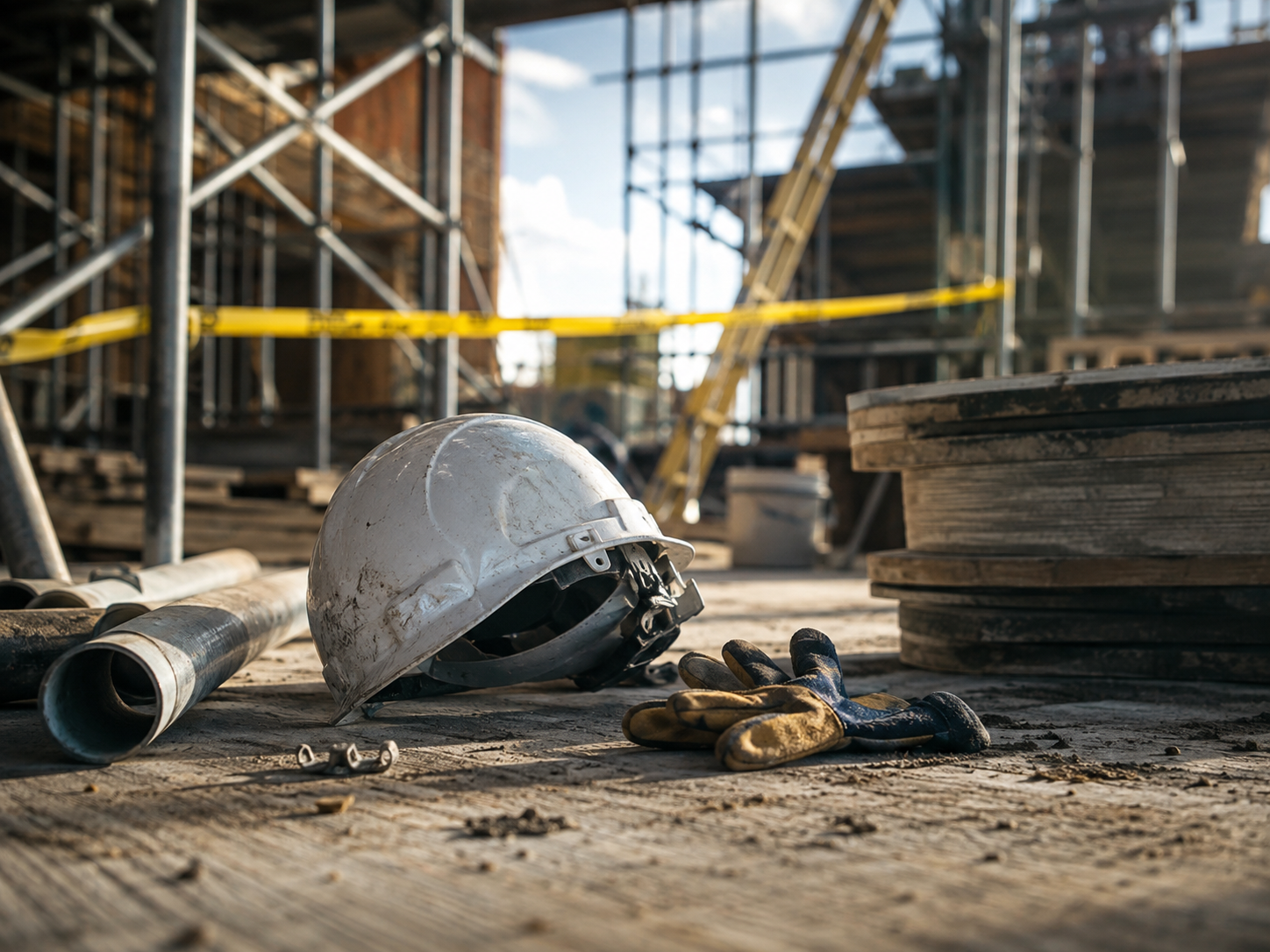
A construction accident can change a worker’s life in seconds. Falls from heights, collapsing structures, falling materials, defective equipment, unsafe ladders, machinery, electrical hazards, and vehicle incidents can cause traumatic brain injuries, spinal injuries, fractures, amputations, and other permanent conditions.
Marks Law Group represents people injured on construction sites throughout Nassau and Suffolk Counties from our office in Great Neck. Led by Harris L. Marks, Esq., the firm investigates how the accident occurred, identifies potentially responsible parties, evaluates applicable New York Labor Law protections, preserves worksite evidence, and develops the full extent of the client’s injuries and financial losses.
Construction injury cases can be significantly more complex than ordinary workplace accidents. A worker may have a workers’ compensation claim while also having potential claims involving property owners, general contractors, subcontractors, equipment companies, or other parties depending on the circumstances.
The sooner a serious construction accident is investigated, the greater the opportunity to preserve photographs, equipment, contracts, safety records, witness information, surveillance, incident reports, and other evidence from the job site.
New York provides specific statutory protections for workers performing construction, demolition, repair, excavation, and other covered work. Which provisions apply depends on the work, accident, defendants, and evidence.
New York Labor Law §200 sets out a general duty to provide reasonable and adequate protection for the lives, health, and safety of people employed in or lawfully frequenting covered workplaces.
New York Labor Law §240 requires covered owners, contractors, and their agents to provide specified safety devices for certain elevation-related work, including scaffolds, hoists, ladders, slings, ropes, and other protective equipment.
New York Labor Law §241 establishes safety requirements for construction, excavation, and demolition work. Claims under §241(6) can involve specific safety rules applicable to the work and accident.
Coverage depends on factors such as the type of work being performed, how the injury occurred, the parties involved, ownership and contracting relationships, site control, and the specific safety devices or regulations implicated.
Construction sites contain numerous hazards capable of causing catastrophic injuries when proper safety practices, equipment, or protections are not in place.
Falls from roofs, elevated platforms, unfinished floors, structural steel, openings, and other elevated work areas can result in severe or fatal injuries.
Unsafe, unstable, defective, improperly positioned, or insufficient scaffolds and ladders can expose workers to dangerous elevation-related risks.
Tools, materials, debris, structural components, equipment, and suspended loads can cause devastating injuries when they fall or are inadequately secured.
Cranes, hoists, power tools, forklifts, excavators, lifts, cutting equipment, and other machinery can cause serious injury when unsafe or improperly operated.
Cave-ins, unstable soil, equipment movement, falling materials, and inadequate protection can create life-threatening hazards during excavation work.
Workers can be injured by trucks, forklifts, construction vehicles, moving equipment, swinging loads, materials, and other objects moving through an active worksite.
Construction workers may have more than one potential source of benefits or compensation. Workers’ compensation and a third-party personal injury action are separate legal systems.
Under New York Workers’ Compensation Law §11 , workers’ compensation generally serves as the exclusive remedy against an employer for a covered workplace injury, subject to statutory exceptions.
That does not necessarily eliminate potential claims against other legally responsible parties involved with the project.
Construction projects often involve several companies and contractual relationships. Determining responsibility requires examining the project structure, work being performed, site conditions, control, equipment, and applicable law.
Depending on the work and circumstances, property owners, general contractors, and their agents may be among the parties evaluated under New York’s construction safety laws.
Subcontractors, trade contractors, site managers, vehicle operators, and other project participants may require analysis when their work or conduct contributed to the accident.
Equipment owners, rental companies, maintenance providers, suppliers, and manufacturers may become relevant when machinery, tools, safety devices, or products contributed to an injury.
Construction accidents can result in injuries requiring surgery, rehabilitation, extended time away from work, and lifelong care.
Falls, falling objects, equipment impacts, and other worksite incidents can cause concussions and more severe traumatic brain injuries.
Serious spinal injuries can affect mobility, strength, sensation, employment, independence, and future medical needs.
Falls and heavy impacts can cause complex fractures, joint injuries, ligament damage, and other conditions requiring surgery and rehabilitation.
Machinery, structural components, materials, vehicles, and collapses can cause extensive tissue, bone, nerve, and organ damage.
Machinery and severe trauma can result in loss of limbs, fingers, or other permanent injuries requiring substantial medical treatment and adaptation.
When a construction accident results in death, the estate and family may need to evaluate potential wrongful death and survival claims under New York law.
Long Island Wrongful Death Attorney →Potential compensation depends on the legal claims available, responsible parties, insurance coverage, medical evidence, financial losses, future needs, and other circumstances.
Emergency care, hospitalization, surgery, specialists, diagnostic testing, rehabilitation, medication, and other accident-related treatment can be significant.
Serious construction injuries may prevent a worker from returning to work for weeks, months, or longer.
Permanent physical limitations may prevent an injured worker from returning to the same trade or earning at the same level.
Catastrophic injuries may require future surgery, therapy, medication, assistive equipment, home modifications, or continuing care.
Where legally recoverable, damages can include the physical pain and other non-economic consequences of the injuries.
Permanent injuries can interfere with independence, family life, mobility, recreation, and everyday activities.
Construction litigation often requires reconstructing an accident within a project involving multiple companies, contracts, safety responsibilities, workers, equipment, and insurance policies.
Depending on the case, the investigation may involve site photographs, surveillance, incident reports, contracts, subcontract agreements, safety plans, training records, equipment records, witness testimony, medical evidence, depositions, and expert analysis.
Harris Marks has recovered more than $40 million for injured clients over his career.
*Prior results do not guarantee a similar outcome.
Identify photographs, video, reports, equipment, witnesses, safety documents, and records before evidence is altered, moved, or lost.
Determine the owner, general contractor, subcontractors, employers, equipment providers, and other parties involved with the project and accident.
Evaluate the work, equipment, site conditions, applicable Labor Law provisions, safety regulations, and evidence concerning how the injury occurred.
Document medical treatment, future care, lost wages, reduced earning capacity, functional limitations, and the long-term consequences of the injury.
The deadline depends on the legal theory, defendants, and circumstances. Workers’ compensation requirements can also operate separately from personal injury litigation deadlines.
Many New York personal injury actions are subject to the three-year limitations period contained in CPLR §214 , although a different period can apply depending on the claim and defendant.
When a tort Notice of Claim is required against a public corporation, General Municipal Law §50-e generally requires service within 90 days after the claim arises in covered circumstances.
Even where a lawsuit deadline is years away, worksite conditions can change immediately and equipment, video, witnesses, documents, and other evidence can become difficult to locate.
Public defendants, workers’ compensation requirements, wrongful death claims, and other circumstances can involve different deadlines or procedural requirements.
Marks Law Group represents seriously injured construction workers throughout Long Island, including cases arising from projects in Nassau and Suffolk Counties.
The firm’s physical office is in Great Neck, Nassau County. Long Island construction representation is not limited to the community where the office is located.

Harris L. Marks, Esq. represents people who have suffered serious injuries in construction accidents throughout Long Island and New York.
From Marks Law Group’s office in Great Neck, Nassau County, Harris handles serious injury matters involving complex liability, multiple defendants, disputed safety responsibilities, substantial medical needs, and significant financial losses.
Construction cases can involve extensive documentation and several parties with competing versions of what happened. The firm’s approach emphasizes early investigation, evidence preservation, detailed damages analysis, and preparation for litigation.
Every construction injury claim depends on its own worksite, evidence, project relationships, injuries, responsible parties, insurance coverage, and applicable law.
Prior results do not guarantee future outcomes.
Serious construction accidents can overlap with other areas of personal injury law depending on the accident and resulting injuries.
Brain injuries, spinal injuries, amputations, and other permanent conditions can require detailed analysis of future care, earning capacity, and lifetime needs.
Catastrophic Injury Lawyer →Fatal construction accidents can create potential wrongful death and survival claims involving distinct New York estate and damages rules.
Long Island Wrongful Death Attorney →Marks Law Group represents people seriously injured through negligence throughout Nassau and Suffolk Counties.
Long Island Personal Injury Lawyer →Marks Law Group’s physical office is located in Great Neck on Long Island. From this office, the firm represents construction accident and serious personal injury clients throughout Nassau and Suffolk Counties.
Our Great Neck location provides a Long Island base for representing workers and families affected by serious construction accidents throughout Nassau and Suffolk Counties.
Marks Law Group, P.C. 111 Great Neck Road, Suite 201-M Great Neck, NY 11021 (516) 687-9763Answers to common questions following a serious construction-site injury in Nassau or Suffolk County.
Potentially. Workers’ compensation and third-party personal injury claims are different legal systems.
Under Workers’ Compensation Law §11 , workers’ compensation generally serves as the exclusive remedy against an employer for a covered workplace injury, subject to statutory exceptions.
Depending on the accident, separate claims against owners, contractors, equipment companies, vehicle operators, or other responsible third parties may require evaluation.
Labor Law §240 applies to specified construction-related work and requires covered owners, contractors, and their agents to provide enumerated safety devices intended to protect workers from certain elevation-related hazards.
Whether §240 applies depends on the type of work, accident, parties, and circumstances.
Labor Law §241 establishes safety requirements applicable to construction, excavation, and demolition work.
Claims under §241(6) can require analysis of specific safety regulations relevant to the work and accident.
Depending on the project and accident, potentially relevant parties may include property owners, general contractors, subcontractors, other contractors, equipment owners, maintenance providers, vehicle operators, suppliers, manufacturers, and other entities.
Responsibility cannot be determined from a party’s title alone; the contracts, work, control, accident circumstances, and applicable law must be evaluated.
Many New York personal injury actions are subject to the three-year limitations period in CPLR §214 , but that period is not universal.
Public projects can involve additional notice requirements. When a tort Notice of Claim is required against a public corporation, General Municipal Law §50-e generally contains a 90-day rule in covered circumstances.
Important evidence can include photographs, video, surveillance footage, incident reports, witness information, construction contracts, safety plans, training materials, daily logs, equipment records, inspection records, medical records, and employment information.
The effect of an injured worker’s conduct depends on the legal claim being pursued and the circumstances of the accident. Different negligence and Labor Law theories can involve different legal considerations.
A construction claim should therefore be evaluated under the particular statutes and evidence rather than assuming that partial fault automatically defeats the case.
Yes. Marks Law Group’s physical office is located in Great Neck, Nassau County, and the firm represents serious construction accident and personal injury clients throughout Nassau and Suffolk Counties and other areas served by the firm.
If you suffered a serious construction injury, Marks Law Group can review what happened, identify the parties and New York Labor Law provisions that may be relevant, and discuss your options for pursuing compensation.
Prior results do not guarantee a similar outcome. Nothing on this page creates an attorney-client relationship or constitutes legal advice.