
Multiple Potential Defendants
Depending on the facts, a case may require investigation of the driver, employer, motor carrier, truck owner, maintenance provider, contractor, cargo-related entities, and other businesses.
Collisions involving commercial trucks can cause devastating injuries and raise legal issues that go far beyond an ordinary two-car accident. Marks Law Group represents people seriously injured in truck and commercial vehicle crashes throughout Nassau and Suffolk Counties.
Free consultation · No attorney fee unless compensation is recovered.
Case-related expenses may apply depending on the fee agreement.
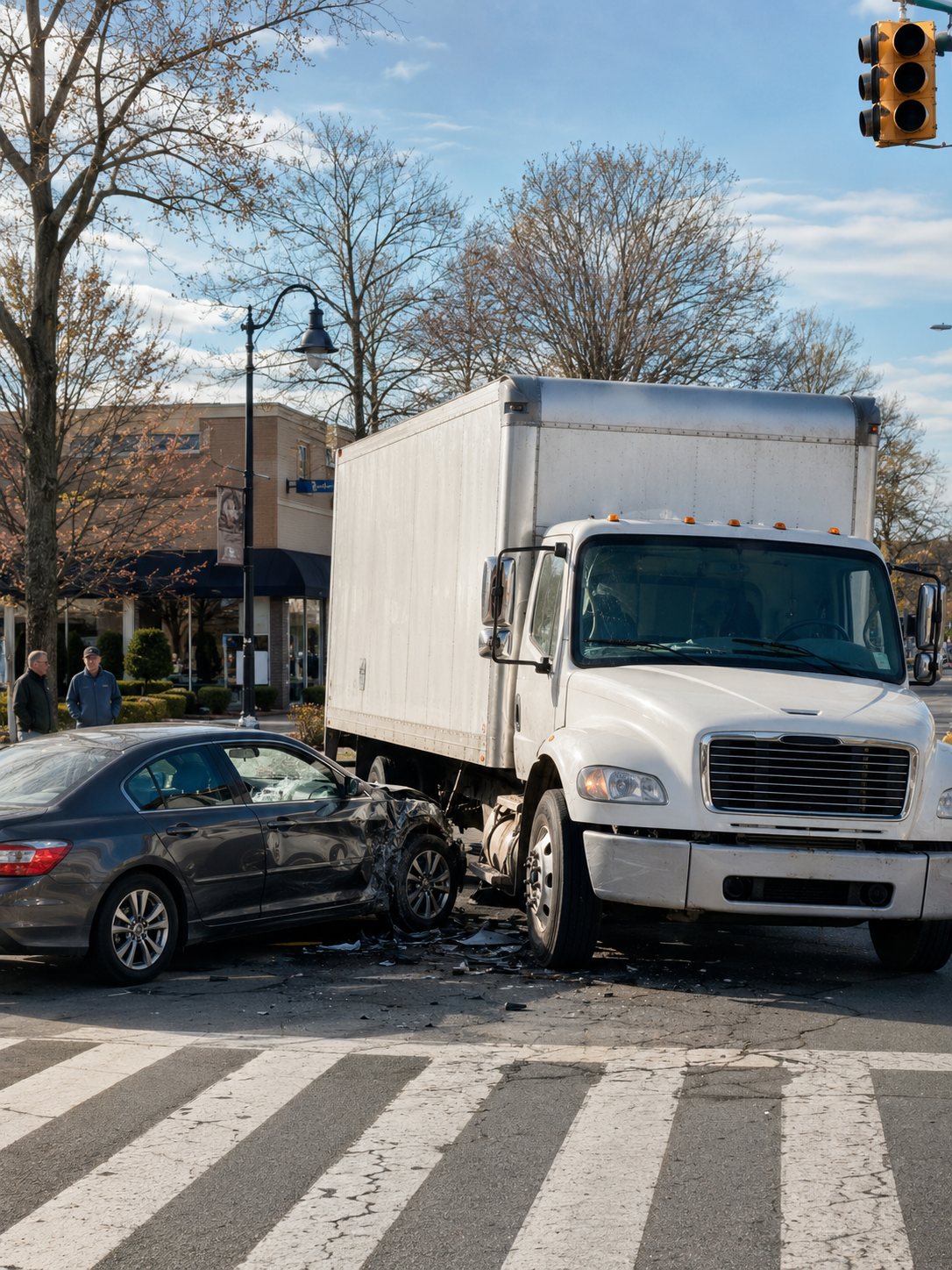
A collision with a tractor-trailer, box truck, delivery vehicle, dump truck, or other commercial vehicle can result in severe orthopedic injuries, brain injuries, spinal trauma, permanent disability, or death.
These cases can also involve more than the driver. Depending on the evidence, the vehicle owner, motor carrier, employer, contractor, maintenance provider, cargo-related company, or another business may require investigation.
Commercial vehicles can generate records that do not normally exist in an ordinary passenger-vehicle case, including electronic logging data, telematics, dispatch records, driver qualification records, inspection records, maintenance histories, and corporate safety documents.
Marks Law Group investigates serious truck accident claims throughout Long Island from its physical office in Great Neck, Nassau County.
The driver may be only one part of the investigation. Commercial relationships, vehicle ownership, maintenance, cargo operations, insurance, and safety records can all matter.
Depending on the facts, a case may require investigation of the driver, employer, motor carrier, truck owner, maintenance provider, contractor, cargo-related entities, and other businesses.
Electronic logs, telematics, GPS information, dispatch communications, inspection reports, employment records, maintenance records, and other business documents may contain important evidence.
The size and weight of commercial vehicles can contribute to substantial forces in a collision, increasing the potential for permanent and catastrophic injuries.
Different collision patterns can raise different questions about driver conduct, vehicle condition, visibility, cargo, speed, and commercial operations.
Collisions involving semi-trucks and tractor-trailers can involve motor carriers, drivers, trailers, business records, and commercial insurance.
Stopping distance, speed, driver attention, following distance, braking systems, and vehicle weight may require investigation.
Loss of trailer control can involve braking, speed, roadway conditions, vehicle condition, and driver operation.
Large commercial vehicles have substantial areas around the vehicle that can be difficult for drivers to observe. Mirrors, cameras, positioning, signaling, and driver attention may become relevant.
Commercial delivery vehicles can create liability questions involving employers, contractors, vehicle owners, delivery companies, and insurers.
Dump trucks, flatbeds, utility vehicles, and other heavy commercial vehicles can involve vehicle operation, loading, maintenance, worksite, and roadway issues.
One of the most important differences between truck and ordinary car accident litigation is the potential number of people and businesses connected to the vehicle.
Responsibility depends on the evidence and legal relationships involved. A company appearing on the side of a truck is not automatically the only legally responsible business.
Commercial trucks are not always owned by the person driving them. Ownership and permission to use the vehicle can therefore become part of the liability analysis.
New York Vehicle and Traffic Law §388 addresses liability of a vehicle owner for injury or death resulting from negligent use or operation by a person operating the vehicle with the owner’s express or implied permission, subject to the statute and other applicable law.
Employment status, contracts, dispatch arrangements, motor-carrier relationships, ownership documents, and other business records can affect which parties require investigation.
Commercial vehicle claims may involve more than one policy or layer of insurance. Coverage should be evaluated together with the underlying liability evidence.
Where federal motor-carrier regulations apply, the investigation may extend beyond ordinary New York traffic rules.
The Federal Motor Carrier Safety Administration regulates hours of service for covered commercial motor vehicle drivers, including driving and on-duty limits and required rest periods.
Driver qualification information, electronic logging data, duty-status records, training records, prior safety issues, and employment information may become relevant depending on the case.
Inspection records, maintenance history, repair documents, braking systems, tires, lighting, and other mechanical evidence may require review after a serious collision.
The vehicle, carrier, type of operation, route, cargo, and other circumstances determine what federal or state commercial-vehicle rules may apply.
A commercial vehicle collision can generate electronic, physical, documentary, and corporate evidence that should be identified as early as possible.
Electronic logging devices, telematics, GPS information, event data, onboard systems, dash-camera footage, and other vehicle information can potentially help reconstruct events surrounding a crash.
Dispatch records, driver files, inspection reports, maintenance history, contracts, policies, safety documents, and communications may identify relevant commercial relationships and practices.
Photographs, surveillance video, roadway evidence, witness statements, police records, vehicle damage, and physical evidence remain important alongside commercial records.
Severe truck crashes can produce injuries requiring surgery, rehabilitation, prolonged time away from work, and substantial future medical care.
Head trauma can affect cognition, memory, concentration, communication, balance, personality, employment, and independent living.
Severe back and spinal injuries can cause chronic pain, neurological impairment, mobility limitations, or permanent disability.
Multiple fractures, joint injuries, ligament damage, and other orthopedic injuries may require surgical repair and extended rehabilitation.
High-impact collisions can cause organ damage, internal bleeding, chest injuries, and other conditions requiring emergency treatment.
Some injuries permanently affect mobility, work capacity, independence, or the ability to perform normal activities.
When a commercial vehicle crash causes death, the estate and family may need to evaluate potential wrongful death and survival claims.
Long Island Wrongful Death Attorney →Potential compensation depends on liability, injury severity, applicable insurance, responsible parties, financial losses, future needs, and the law governing the claim.
Emergency care, hospitalization, surgery, specialists, diagnostic testing, rehabilitation, medication, and other accident-related treatment.
Compensation may include qualifying income lost while an injured person is unable to work because of the accident.
Permanent injuries may affect future employment, career options, work hours, or lifetime earning ability.
Serious injuries may require future surgery, rehabilitation, medication, equipment, home assistance, or other continuing care.
Where legally recoverable, compensation may account for physical pain and other non-economic consequences caused by the injuries.
Permanent limitations can affect independence, recreation, family responsibilities, mobility, and everyday activities.
A serious commercial vehicle claim should not be evaluated solely from the police report. The driver, vehicle, motor carrier, commercial relationships, electronic data, insurance, injuries, and future losses may all require analysis.
Marks Law Group develops these issues together so the claim reflects both how the collision occurred and the full effect of the resulting injuries.
Identify vehicles, electronic data, video, photographs, witnesses, logs, records, and other potentially time-sensitive evidence.
Determine ownership, employment, motor-carrier, maintenance, contracting, cargo, and other relationships connected to the truck.
Connect crash evidence with medical treatment, financial loss, future care, earning capacity, and other legally recoverable damages.
Use discovery, depositions, commercial records, experts, motion practice, negotiation, and trial preparation when necessary.
The deadline depends on the claim and parties involved. Evidence-preservation concerns can arise long before the formal statute of limitations expires.
Many New York personal injury actions are subject to the three-year limitations period contained in CPLR §214 .
If a municipality, public authority, or other public entity is involved, additional notice or filing requirements may apply and can be substantially shorter.
Electronic data, video, vehicle condition, dispatch information, logs, and business records may need to be preserved well before a lawsuit is filed.
Marks Law Group’s physical office is in Great Neck, Nassau County. The firm’s truck accident representation extends throughout Nassau and Suffolk Counties.
Browse our Long Island personal injury page or view all Marks Law Group service areas .

Harris L. Marks, Esq. is the founder and personal injury trial attorney at Marks Law Group, P.C.
He handles serious motor vehicle and commercial vehicle injury claims involving substantial injuries, disputed responsibility, multiple defendants, insurance issues, and significant financial losses.
Harris remains directly involved in the major strategic stages of the firm’s cases, including investigation, discovery, depositions, expert development, settlement strategy, and trial preparation.
*Prior results do not guarantee a similar outcome.
Every commercial vehicle claim depends on its own crash evidence, defendants, business relationships, injuries, insurance, damages, and applicable law.
Prior results do not guarantee a similar outcome.
Representation following serious passenger-vehicle collisions throughout Nassau and Suffolk Counties.
Car Accident Lawyer →Serious injury representation for riders injured in Long Island motorcycle crashes.
Motorcycle Accident Lawyer →Representation involving permanent brain, spinal, orthopedic, and other life-changing injuries.
Catastrophic Injury Lawyer →Marks Law Group’s physical office is located in Great Neck, Nassau County. From this office, the firm represents serious truck accident clients throughout Long Island.
Depending on the evidence, potential defendants can include the truck driver, motor carrier, employer, truck or trailer owner, maintenance provider, contractor, cargo-related companies, and other entities connected to the vehicle or commercial operation.
Commercial vehicle cases can involve corporate defendants, motor-carrier relationships, electronic logging and telematics data, commercial safety rules, maintenance records, driver qualification information, multiple insurance policies, and other evidence that may not exist in a typical passenger-car collision.
Depending on the case, relevant evidence can include electronic logs, telematics, GPS and dispatch information, video, photographs, inspection and maintenance records, driver records, contracts, insurance information, witness information, and physical evidence from the vehicles and crash scene.
New York Vehicle and Traffic Law §388 addresses vehicle-owner liability for negligent use or operation by a permissive driver, subject to the statute and other applicable law. Ownership and commercial relationships must be evaluated based on the particular case.
They can. Where federal motor-carrier regulations apply, hours-of-service rules regulate driving and on-duty periods and required rest. Electronic logs and related records may therefore become relevant to whether fatigue or driving time contributed to a crash.
Many New York personal injury actions are governed by the three-year limitations period in CPLR §214 . Different or shorter requirements can apply depending on the defendants and circumstances.
Yes. Marks Law Group is physically based in Great Neck, Nassau County and represents serious truck and commercial vehicle injury clients throughout Nassau and Suffolk Counties and other areas served by the firm.
Marks Law Group can review how the crash occurred, identify the commercial parties that may require investigation, evaluate available evidence and insurance, and discuss your legal options.
Attorney Advertising. Prior results do not guarantee a similar outcome. Nothing on this page constitutes legal advice or creates an attorney-client relationship.