
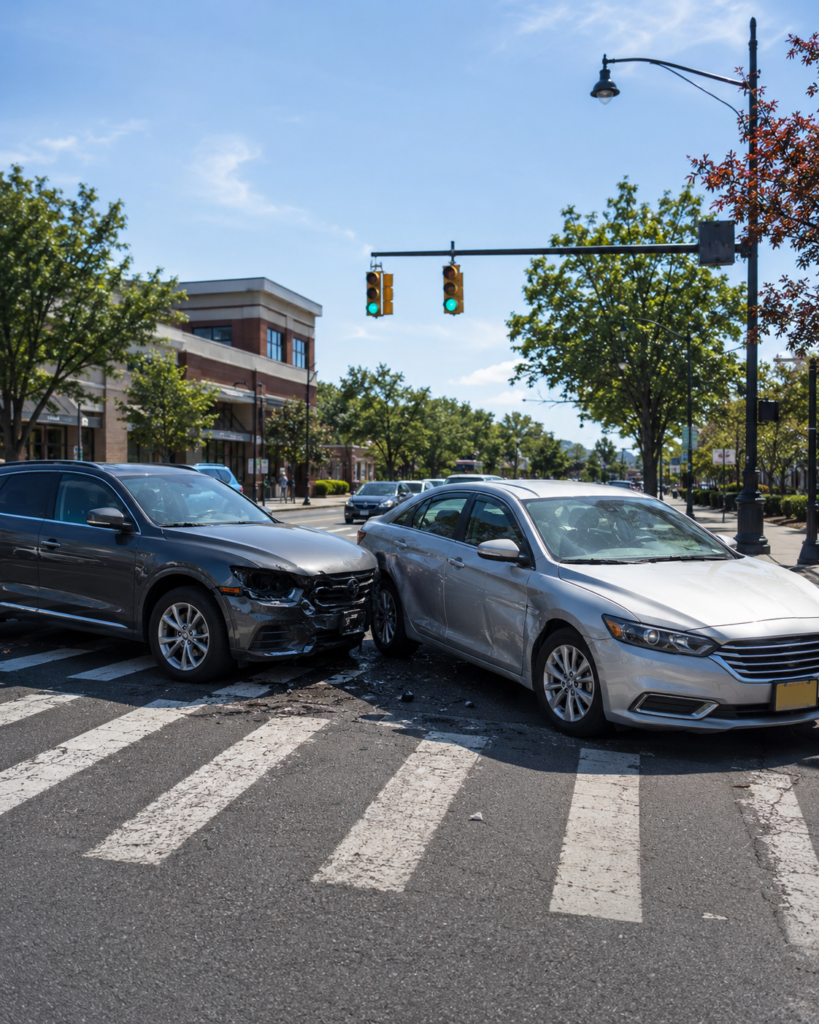
Yes. New York is a no-fault state for most motor vehicle accidents. Basic no-fault insurance, also known as Personal Injury Protection (PIP), generally pays qualifying medical expenses, lost earnings, and certain other necessary expenses regardless of who caused the crash. Separate rules apply when an injured person seeks compensation beyond no-fault benefits.
Key Takeaways
- New York basic no-fault coverage is generally $50,000 per eligible injured person for defined economic losses arising from a covered motor-vehicle accident.
-
Basic benefits can include necessary medical and rehabilitation expenses, 80% of lost earnings up to $2,000 per month for up to three years, and up to $25 per day for certain other necessary expenses for up to one year, subject to statutory rules and offsets.
-
A written no-fault claim generally must be submitted as soon as reasonably practicable and no later than 30 days after the accident unless the injured person can provide a clear and reasonable justification for late notice.
-
No-fault does not pay for vehicle property damage and does not prevent all lawsuits against an at-fault driver.
-
To recover non-economic damages such as pain and suffering in a covered auto case, an injured person generally must satisfy New York’s statutory “serious injury” requirement.
In This Guide
What Does “No-Fault” Mean in New York?
New York’s no-fault system is designed to provide prompt payment of certain economic losses after a covered motor-vehicle accident without requiring the injured person to prove that another driver was negligent first.
The New York Department of Financial Services explains that no-fault, or Personal Injury Protection (PIP), pays qualifying economic losses up to $50,000 per person under basic coverage for eligible drivers, passengers, and pedestrians injured through the use or operation of a motor vehicle in New York.
The statutory framework is found in Article 51 of the New York Insurance Law. Insurance Law Section 5102 defines terms including basic economic loss and serious injury, while Section 5103 addresses entitlement to first-party benefits.
What Does Basic No-Fault Insurance Cover?
According to DFS, basic no-fault benefits can include reasonable and necessary accident-related medical and rehabilitation expenses paid under applicable fee schedules; 80% of lost earnings from work up to a maximum payment of $2,000 per month for up to three years from the date of the accident, subject to statutory offsets; and up to $25 per day for up to one year for certain other reasonable and necessary expenses, such as household help or transportation to medical treatment.
DFS also describes a $2,000 death benefit payable to the estate of a person eligible for no-fault benefits, in addition to the basic economic-loss limit.
The $50,000 figure is a combined basic limit, not $50,000 for each separate category. Optional Additional PIP or Optional Basic Economic Loss coverage may increase available first-party benefits depending on the policy.
Who Usually Gets No-Fault Benefits?
No-fault generally follows the vehicle for a crash occurring in New York. A driver or passenger typically files with the insurer covering the vehicle they occupied. A pedestrian typically files with the insurer of the vehicle that struck them.
DFS provides special rules for situations involving uninsured or unidentified vehicles and directs eligible people, in certain circumstances, to household auto coverage or the Motor Vehicle Accident Indemnification Corporation (MVAIC). Coverage priority can be fact-specific, so the correct carrier should be identified promptly.
A public-project deadline may be measured in days, not years. Get the timeline reviewed now
Request a free review from Harris Marks. Get honest, case-specific answers.
How Long Do You Have to File a No-Fault Claim?
The DFS No-Fault FAQs state that written notice identifying the injured person and providing reasonably obtainable information about the time, place, and circumstances of the accident should be given as soon as reasonably practicable, but generally no later than 30 days after the accident.
A late submission may still be considered when the eligible injured person provides written proof of a clear and reasonable justification for the delay. Because disputes over notice can affect benefits, waiting unnecessarily can create avoidable problems.
DFS also explains that the insurer is generally required to send the prescribed Application for Motor Vehicle No-Fault Benefits after receiving notice of the claim.
What No-Fault Does Not Cover
No-fault is personal injury protection. It does not pay to repair the insured vehicle or the other vehicle. Property damage is handled through collision coverage, property-damage liability, or another applicable coverage depending on fault and the policies involved.
No-fault also does not mean an at-fault driver can never be sued. New York limits certain auto tort claims, but liability remains important when an injured person seeks compensation outside the basic no-fault system.
That distinction is one reason serious motor-vehicle matters often require both insurance analysis and liability investigation. What Does a Car Accident Lawyer Do? explains how those pieces fit together.
When Can an Injured Person Sue the At-Fault Driver?
Under New York’s no-fault framework, an injured person can pursue economic losses that fall outside the basic no-fault system when legally recoverable. Claims for non-economic loss – including pain and suffering – are generally restricted to people who sustain a “serious injury” as defined by Insurance Law Section 5102(d).
The statute includes categories such as death, dismemberment, significant disfigurement, fracture, loss of a fetus, certain permanent or significant limitations, and a medically determined injury or impairment of a non-permanent nature that prevents the injured person from performing substantially all customary daily activities for at least 90 of the 180 days immediately following the injury.
Whether a particular injury satisfies the statutory threshold can depend on medical evidence and controlling case law. A diagnosis alone does not necessarily answer the legal question.
What About Motorcycles?
DFS states that the operator or passenger of a motorcycle involved in an accident is excluded from no-fault benefits. A pedestrian struck by a motorcycle is treated differently and may file a no-fault claim with the motorcycle insurer, subject to the applicable rules.
That makes motorcycle claims materially different from ordinary passenger-vehicle cases. Riders can face separate insurance, liability, and damages issues from the outset.
Does No-Fault Affect Whether Hiring a Lawyer Is Worth It?
It can. A minor claim involving only straightforward no-fault medical bills may not require extensive legal representation. But serious injuries can create overlapping questions about PIP benefits, the serious-injury threshold, liability, future damages, policy limits, uninsured or underinsured coverage, and settlement strategy.
If you are deciding whether your crash has reached that level of complexity, see Is It Worth Hiring an Attorney After a Car Accident? or review Marks Law Group’s car accident representation.
Quick answers to the questions families ask most.
Is New York a no-fault state?
How much no-fault coverage is required in New York?
What does New York no-fault insurance pay for?
How long do I have to file a no-fault claim in New York?
Can I sue the other driver even though New York is a no-fault state?
Questions About No-Fault Benefits or a Serious Car Accident Claim?
Marks Law Group can review which insurer should receive the claim, whether liability issues remain, how the serious-injury threshold may apply, and what additional sources of recovery should be investigated.