
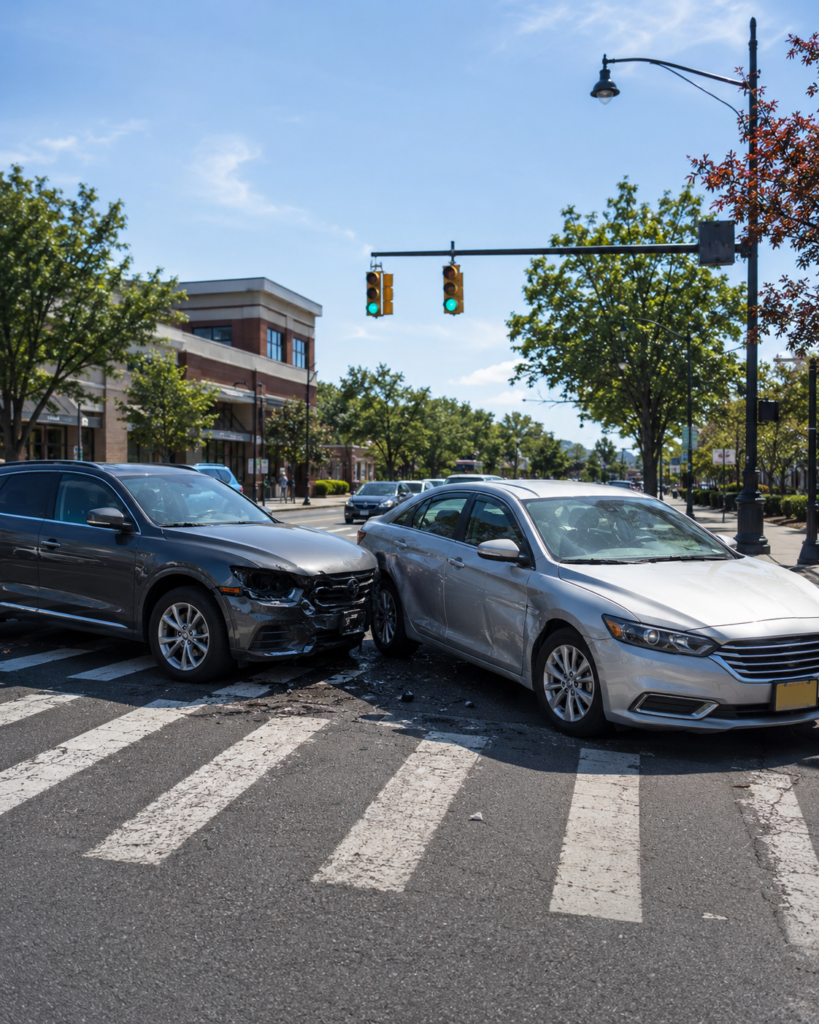
If another driver caused your New York crash, do not assume the claim will automatically resolve in your favor. Protect your health, document the scene, notify the appropriate insurer, preserve no-fault benefits, and gather evidence showing how the collision occurred. Fault can still be disputed, and New York changed its comparative-fault rule for covered motor-vehicle injury actions in May 2026.
Key Takeaways
- Being “not at fault” does not eliminate the need to notify the appropriate no-fault insurer or document the crash.
- The other driver’s insurer may still investigate and dispute liability, so photographs, video, witnesses, and vehicle evidence matter.
- Do not sign an injury release simply because the other insurer accepts responsibility for the vehicle damage.
- For covered Article 51 personal injury actions commenced on or after May 26, 2026, a claimant can be barred if the claimant’s culpable conduct is greater than the fault of the defendant or combined defendants from whom recovery is sought.
- Serious injuries may involve both first-party no-fault benefits and a separate claim against the responsible driver or other parties.
In This Guide
“Not at Fault” Is the Starting Point, Not the End of the Analysis
The fact that another driver rear-ended you, ran a light, failed to yield, or crossed into your lane can be strong liability evidence. But a liability insurer may still investigate speed, lane position, visibility, reaction time, prior movements, or whether another vehicle contributed.
A traffic ticket or police narrative may be useful, but it does not necessarily decide the civil claim by itself. Preserve the underlying evidence that can confirm what happened.
You Still Need to Notify the Appropriate No-Fault Insurer
New York no-fault benefits generally operate without regard to who caused the collision. The Department of Financial Services explains that basic no-fault coverage can pay qualifying medical expenses, lost earnings, and certain other reasonable and necessary expenses for eligible people.
DFS also states that written no-fault notice generally must be given within 30 days unless there is clear and reasonable justification for a late notice. See our no-fault guide for a fuller explanation of which insurer may be responsible.
Preserve Evidence Showing How the Collision Happened
Photograph the vehicles, points of impact, lane markings, signals, signs, debris, road conditions, and the overall scene. Save dashcam footage. Identify witnesses and obtain their contact information. If a business or residence may have surveillance, note the location immediately so preservation can be requested before the footage is overwritten.
For significant injuries, a car accident lawyer may also investigate electronic vehicle data, commercial records, roadway evidence, or other sources that are not obvious at the scene.
Another Driver Caused the Crash? Preserve the Claim Before the Evidence Changes.
Clear fault at the scene does not guarantee that an insurer will accept every part of the claim. Marks Law Group can evaluate the current fault rules, available video and witness evidence, no-fault issues, serious-injury proof, insurance coverage, and whether additional defendants or policies should be investigated.
Get Medical Care and Keep the No-Fault Claim Separate From the Liability Claim
Your health comes first. If you have symptoms after the crash, obtain appropriate medical evaluation and follow recommended care. Keep the no-fault claim moving even when the other driver appears clearly responsible, because no-fault and liability are different parts of the insurance system.
The no-fault carrier handles qualifying first-party benefits. The liability claim addresses whether another person or entity is legally responsible for additional damages. Do not assume one process automatically handles the other.
Be Careful With the Other Driver’s Insurance Company
The other driver’s insurer may contact you quickly. Be accurate and cooperative with legitimate property-damage needs, but understand the difference between discussing vehicle repairs and giving a recorded statement about your injuries, prior medical history, or the mechanics of the collision.
A broad release can end claims permanently. Do not sign an injury release until you understand what rights are being released and whether the medical consequences of the collision are sufficiently known.
New York Changed the Fault Rule for Covered Auto Injury Cases in 2026
This is an important recent change. CPLR § 1411(b) now provides that, in a personal injury action subject to Insurance Law Article 51, a claimant is barred from recovery if the claimant’s culpable conduct is greater than the culpable conduct of the person or combined persons from whom recovery is sought. According to New York DFS, the amendment took effect May 26, 2026 and applies to actions and proceedings commenced on or after that date.
In practical terms, fault evidence matters more than ever in a covered motor-vehicle injury lawsuit. The statute uses the phrase “greater than,” so the analysis is not the same as saying any partial fault eliminates the claim. But a claimant who is found more at fault than the defendant or combined defendants can now face a complete bar in a covered Article 51 action.
Serious Injury Is a Separate Requirement for Pain-and-Suffering Damages
Even when another driver caused the collision, a covered claimant seeking non-economic damages must address New York’s current serious-injury threshold. The 2026 reforms also removed the former 90/180-day category. See our guide to the New York serious-injury threshold for the present statutory categories.
Do Not Let a Property-Damage Settlement End the Injury Claim by Mistake
Property damage can often be resolved before an injury claim is ready to be valued. Review the language of any release or settlement document carefully. A document intended to resolve vehicle damage should not be assumed to preserve every bodily-injury right unless the language actually does so.
If the insurer makes an early bodily-injury offer, compare that proposal against the medical diagnosis, expected treatment, time lost from work, future limitations, available coverage, and current liability evidence before deciding whether final settlement is appropriate.
When Legal Review May Be Useful
Legal review becomes more important when the injuries are substantial, the insurer disputes fault, multiple vehicles are involved, evidence is time-sensitive, the other driver has inadequate coverage, or an early release is being presented. Our guide Is It Worth Hiring an Attorney After a Car Accident in New York? explains when the additional help may justify retaining counsel.
Marks Law Group’s car accident practice handles serious collision claims involving liability, no-fault benefits, injury documentation, insurance coverage, and litigation.
Frequently Asked Questions
Quick answers to the questions families ask most.
Do you still call your own insurance company if the accident was not your fault?
Who pays medical bills after a New York car accident that was not your fault?
Should you give the other driver’s insurance company a recorded statement?
Can the other driver’s insurer still blame you if you did not cause the crash?
What happens if both drivers are found partly at fault?
Another Driver Caused the Crash?
Clear fault at the scene does not guarantee that every insurance or damages issue will be straightforward. Preserve the evidence and understand the claim before signing anything.