
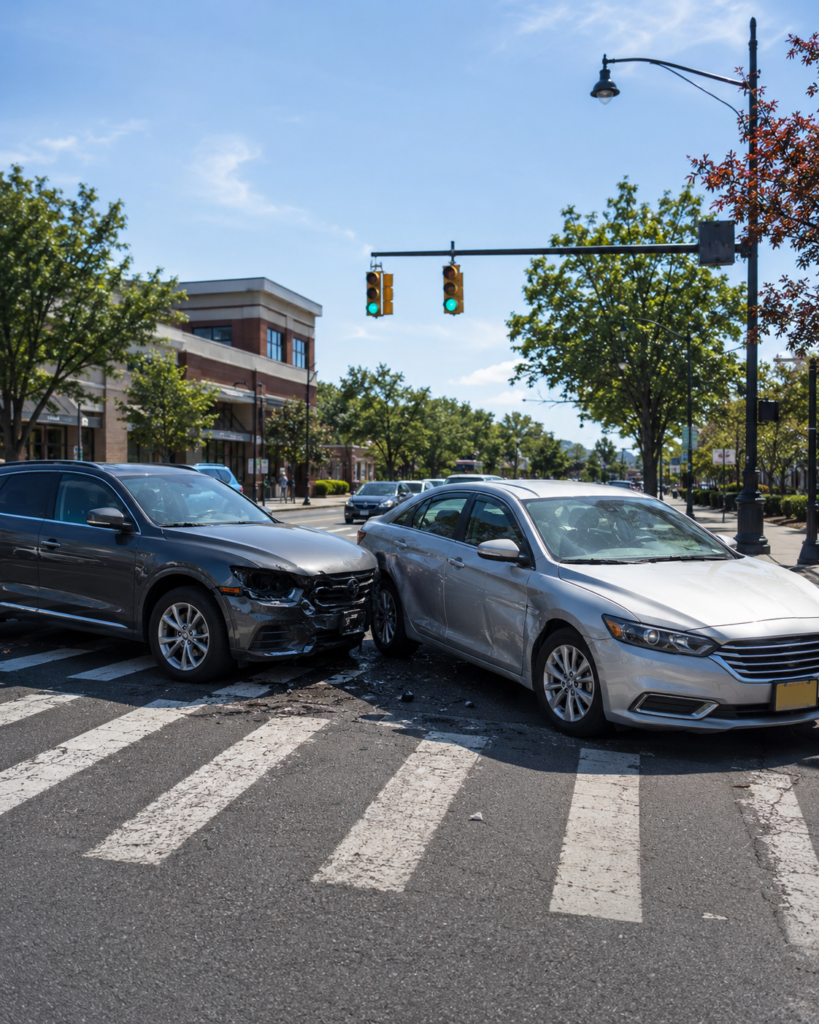
After a New York car accident, focus first on safety and medical needs, then preserve the information that may matter later. Stop at the scene, call for emergency help when needed, exchange required information, photograph the vehicles and roadway, identify witnesses, obtain medical care, notify the appropriate insurer promptly, and determine whether an MV-104 report is required.
Key Takeaways
- If anyone is injured or killed, New York DMV guidance says police must be notified immediately.
- Exchange driver, registration, and insurance information and preserve photographs, video, witness information, and the condition of the vehicles.
- New York no-fault notice generally must be given within 30 days unless a clear and reasonable justification supports a late notice.
- An MV-104 must be filed within 10 days after a New York crash involving injury, death, or more than $1,000 in property damage to any one person.
- Do not assume a police report, traffic ticket, or early insurance opinion finally determines fault or the value of an injury claim.
In This Guide
1. Make the Scene Safe and Call for Help
New York DMV guidance says a driver involved in a crash must stop. If anyone is injured or killed, police must be notified immediately and emergency medical personnel should be called. The DMV’s traffic-crash guidance also instructs drivers to exchange identifying and insurance information.
If the vehicles can be moved safely and local conditions permit, moving out of active traffic may reduce the risk of a secondary collision. Do not put yourself in danger to take photographs or inspect damage.
2. Exchange the Information New York Requires
Obtain the other driver’s name, address, driver-license information, vehicle registration, insurance carrier, policy information, plate number, and contact information. If the driver and registered owner are different people, record both. If a commercial vehicle is involved, photograph company names, DOT numbers, vehicle markings, and any identifying information on the truck or trailer.
Also collect the names and contact information of passengers and independent witnesses. Witnesses can become difficult to locate later, and their recollection may be important if the drivers give conflicting versions of the collision.
3. Document the Crash Before Evidence Changes
Photograph the final resting positions of the vehicles if it is safe to do so, the points of impact, debris, skid or tire marks, traffic signals and signs, lane markings, road construction, weather, lighting, visible injuries, and the surrounding area. Save dashcam footage and do not overwrite it.
For serious injury cases, early evidence preservation is part of what a car accident lawyer may do after a crash. Surveillance from nearby businesses, residences, buses, or municipal systems can disappear quickly.
Seriously Injured in a New York Car Accident?
The first days after a crash can affect medical documentation, insurance benefits, evidence preservation, and the later liability analysis. Marks Law Group can review what happened, identify immediate deadlines and evidence issues, and explain the next steps for a serious injury claim.
4. Get Appropriate Medical Care
Some injuries are obvious at the scene; others become clearer over the next several hours or days. If you have pain, neurological symptoms, difficulty moving, head symptoms, chest or abdominal complaints, or any other concerning change, seek medical evaluation rather than trying to diagnose the problem yourself.
Follow-up matters too. A medical record that begins at the time symptoms appear is generally more useful than trying to reconstruct the history months later. Keep a list of providers, appointments, medications, restrictions, and time missed from work.
5. Notify the Correct Insurer and Protect No-Fault Benefits
New York’s no-fault system can pay certain accident-related medical expenses, lost earnings, and other covered economic losses regardless of fault. The Department of Financial Services states that written notice generally must be submitted as soon as reasonably practicable and no later than 30 days after the accident unless there is clear and reasonable justification for the delay.
See our detailed guide, Is New York a No-Fault State for Car Accidents? for the difference between first-party no-fault benefits and a liability claim against an at-fault driver.
6. Determine Whether You Must File an MV-104
New York DMV’s MV-104 instructions state that a driver must report a New York crash within 10 days when the crash causes a fatality, personal injury, or more than $1,000 in damage to the property of any one person. Reporting the accident to an insurance carrier does not replace this DMV requirement.
If you are physically unable to complete the form because of your injuries, the rules can permit another qualifying person to report. The important point is not to assume that a police report automatically satisfies the driver’s separate MV-104 obligation.
7. Be Careful With Recorded Statements and Releases
An insurance adjuster may ask for a recorded statement, a broad medical authorization, photographs, a repair estimate, or a signed release. Those requests are not all the same. Before signing a release, understand exactly which claims it resolves and whether the medical consequences of the crash are sufficiently known.
Do not exaggerate or hide information. Be accurate. If you are unsure about a request, especially in a serious-injury case, get advice before providing a statement that may later be used to evaluate fault, causation, or damages.
8. Understand the Serious-Injury and Fault Rules
New York’s motor-vehicle law changed in 2026. The current serious-injury definition no longer includes the former 90/180-day category for actions commenced on or after May 26, 2026, and CPLR § 1411(b) now creates a modified comparative-fault rule for personal injury actions subject to Insurance Law Article 51.
That means evidence about both injury severity and fault can be especially important. Our guide to the New York serious-injury threshold explains the current categories in more detail.
9. Preserve a Complete Damages Record
Keep copies of medical bills and explanation-of-benefits documents, no-fault forms, wage-loss records, disability notes, repair estimates, rental-car expenses, photographs of injuries, and correspondence with insurers. For a significant injury, also track the activities you cannot perform, assistance you need, and work responsibilities you cannot complete.
A serious claim should be evaluated from the full evidence, not from a single emergency-room bill or the visible damage to the vehicle.
10. Know When Legal Review Becomes Important
Not every collision requires a lawyer. But if the crash causes a substantial injury, fault is disputed, the insurer is pushing for an early statement or release, multiple vehicles or defendants are involved, or coverage is unclear, review may be useful before important evidence or deadlines are lost. See Is It Worth Hiring an Attorney After a Car Accident in New York? for a practical framework.
Marks Law Group handles serious motor-vehicle matters through its car accident practice, with Harris L. Marks, Esq. personally involved in major litigation decisions.
Frequently Asked Questions
Quick answers to the questions families ask most.
Do you have to call the police after a car accident in New York?
When do you have to file an MV-104 in New York?
How long do you have to give notice of a New York no-fault claim?
Should you get medical care if you feel sore after a crash?
When should you contact a car accident lawyer?
Questions About No-Fault Benefits or a Serious Car Accident Claim?
Marks Law Group can review which insurer should receive the claim, whether liability issues remain, how the serious-injury threshold may apply, and what additional sources of recovery should be investigated.