
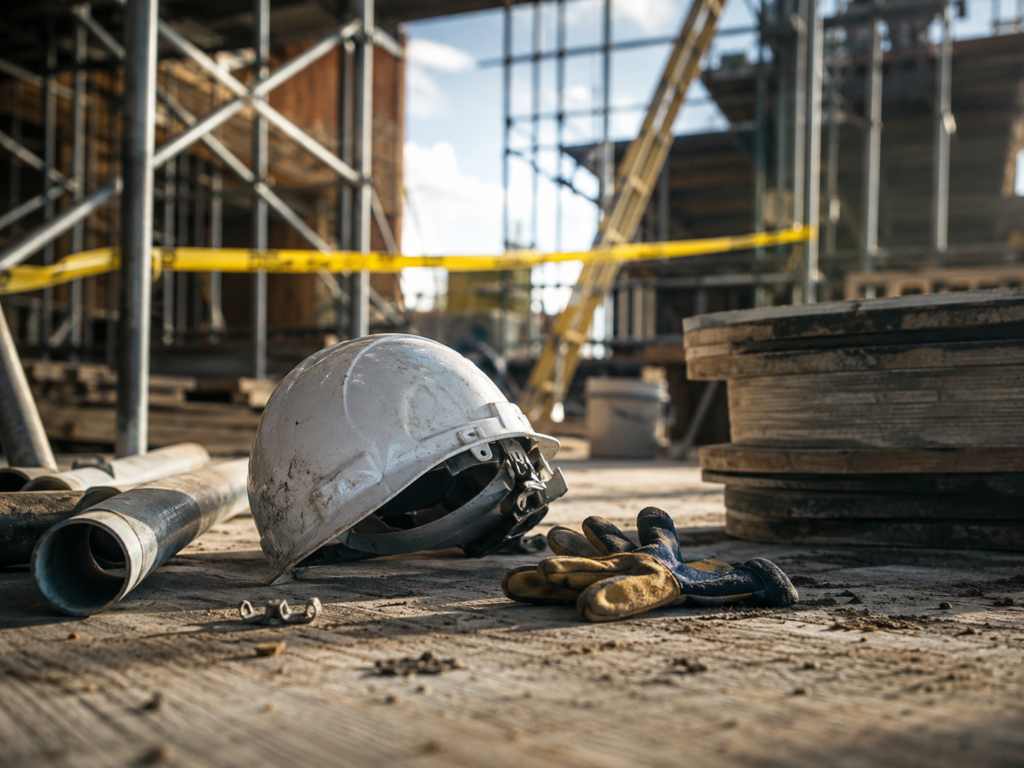
After a New York construction accident, prioritize medical care and immediate safety, report the incident through the worksite process, preserve photographs and information about the scene/equipment, identify witnesses and all companies on the project, save medical and employment records, and promptly review both workers’ compensation and possible third-party claims. Construction sites change quickly, so evidence preservation should not wait for symptoms or paperwork to “settle down.”
Key Takeaways
- Get appropriate medical care and make sure the history accurately describes how the work accident happened.
- Report the accident, but avoid guessing about facts you do not know or signing broad releases without understanding them.
- Preserve photographs, video, equipment identification, witness names, and contractor/company information before the site changes.
- Workers’ compensation and a third-party Labor Law or negligence claim may both need to be evaluated.
- Do not rely on a general three-year rule because public-entity notices, workers’ compensation requirements, and evidence-preservation needs can arise much earlier.
In This Guide
1. Get Medical Care and Address Immediate Safety
Serious construction injuries can worsen after the initial event. Emergency care, follow-up evaluation, and compliance with medical instructions serve the health issue first. The medical history should accurately identify when and how the injury occurred.
A worker should not exaggerate or minimize symptoms for the sake of a claim. Consistent, accurate medical documentation helps doctors treat the injury and later helps distinguish accident-related conditions from unrelated history.
2. Report the Accident Through the Worksite Process
Notify the appropriate employer or supervisor as soon as practicable and follow the site’s incident-reporting process. Ask for a copy of any incident report you are permitted to receive and write down who was notified, when, and how.
Be factual. If you did not see why a scaffold shifted or who moved a piece of equipment, do not guess. Early reports can become important evidence, and assumptions made in the first hours can create unnecessary disputes later.
3. Preserve the Scene, Equipment, and Visual Evidence
If it can be done safely, photographs and video should document the accident area, the device or equipment involved, the surrounding conditions, warning signs, floor or elevation conditions, and anything that changes after the incident. Record identifying information such as manufacturer labels or serial numbers when relevant.
Construction sites are temporary environments. Guardrails are installed, debris is removed, openings are covered, ladders disappear, and equipment is returned. Preservation notices and prompt inspection can be more important than relying on memory months later.
Evidence can disappear quickly. Request an immediate construction-accident review.
Request a free review from Harris Marks. Get honest, case-specific answers.
4. Identify Witnesses and Every Company on the Site
Record names and contact information for coworkers and other witnesses. Also identify the general contractor, property owner, construction manager, subcontractors, equipment providers, and any other companies connected to the area or task.
This information helps build the responsibility map needed for a third-party claim. For the liability framework, see Who Is Liable for a Construction Site Accident?
5. Preserve Work and Wage Records
Save pay stubs, union records, work schedules, time records, tax documents, benefit statements, job classifications, and communications about work restrictions or return-to-work status. These records can become important for workers’ compensation and for proving wage loss or reduced earning capacity in a third-party case.
Also preserve text messages, emails, photographs, and instructions related to the task or equipment. Do not edit or selectively delete communications once litigation is reasonably anticipated.
6. Evaluate Workers’ Compensation and Third-Party Claims Together
Workers’ compensation may provide medical and wage-related benefits through the employer system. A separate third-party case can exist when an owner, contractor, subcontractor, equipment company, or other non-employer bears legal responsibility.
New York Labor Law §§ 200, 240, and 241 can materially change that analysis. Read Can You Sue After a Construction Accident in New York? for the distinction.
7. Be Careful With Recorded Statements, Releases, and Social Media
Insurers and investigators may request statements while the facts and medical picture are still developing. Provide required information through the appropriate process, but understand who is asking, what claim the statement concerns, and whether you are being asked to sign a release that affects rights beyond the immediate benefit.
Social-media posts can also become evidence. Avoid posting accident reconstructions, medical conclusions, or activity that can be taken out of context while a claim is being investigated.
8. Review Deadlines Early
Many New York personal-injury actions have a three-year limitations period under CPLR 214, but that is not a universal construction-accident deadline. Public-entity claims can trigger a 90-day notice requirement under General Municipal Law § 50-e, and workers’ compensation has separate rules.
Our deadline guide explains how long you may have to file a construction accident claim.
Frequently Asked Questions
Quick answers to the questions families ask most.