
Category Archives: Blog

When Do You Need a Personal Injury Lawyer in New York?

Car accident lawyer long island

You should consider speaking with a personal injury lawyer when an accident causes a significant or potentially permanent injury, fault is disputed, multiple parties or insurance policies may be involved, a government or commercial defendant is connected to the incident, the insurer is pressing for a statement or early settlement, or you are unsure which legal deadlines apply. The more serious or complex the consequences, the more valuable early legal evaluation can become.

Key Takeaways

  • Not every minor accident requires a personal injury lawyer; the need usually increases with the seriousness, complexity, and long-term consequences of the claim.

  • Serious injuries, disputed liability, multiple defendants, uncertain insurance coverage, future medical needs, lost earning capacity, or government involvement are strong reasons to seek legal advice.

  • Early investigation can matter because video can be overwritten, physical conditions can change, records can be lost, and witnesses can become harder to locate.

  • New York deadlines are not uniform. Many negligence-based personal injury actions fall under a three-year limitations period, but shorter notice and filing rules can apply to public entities and specialized claims.

  • A consultation should help you understand the legal issues and options; it should not require you to know every fact or possess every document before you call.

In This Guide

    Not Every Injury Claim Requires a Lawyer

    A lawyer should not be hired simply because an accident occurred. If there is no meaningful physical injury, the only dispute is minor property damage, and the insurance process is straightforward, retaining personal injury counsel may add little value.

    The analysis changes when the consequences are larger. Personal injury law becomes more complicated when the injured person is facing surgery, permanent impairment, lengthy rehabilitation, substantial lost income, future medical needs, disputed responsibility, multiple defendants, limited insurance, or legal deadlines that are difficult to identify.

    The practical question is not “Does every injured person need a lawyer?” It is “Are there legal, evidentiary, medical, insurance, or damages issues that could materially affect this claim?”

    Serious or Long-Term Injuries Are a Major Reason to Get Legal Advice

    A claim involving a broken bone, surgery, traumatic brain injury, spinal injury, significant orthopedic injury, permanent limitation, scarring, or a long period out of work usually requires more than adding up current medical bills.

    The future may need to be evaluated: additional procedures, therapy, medication, home assistance, reduced work capacity, vocational consequences, or long-term functional limitations. Those issues can require medical, economic, vocational, or other expert evidence.

    Marks Law Group’s Long Island personal injury page explains that serious injury cases depend on the evidence, injuries, defendants, insurance coverage, damages, and applicable law rather than a one-size-fits-all formula.

    You Should Also Consider a Lawyer When Fault Is Disputed

    An insurer may accept that an accident occurred while still disputing who caused it. In premises cases, the owner may deny notice of a dangerous condition. In construction matters, several companies may point to one another. In motor-vehicle cases, each driver may present a different account.

    A lawyer can investigate the factual record instead of relying on assumptions. That may include locating video, speaking with witnesses, reviewing contracts or ownership records, examining photographs and physical evidence, and using discovery or experts when the dispute cannot be resolved informally.

    If your injury arose from a motor-vehicle crash, What Does a Car Accident Lawyer Do? explains how that process can differ from a basic insurance claim.

    A public-project deadline may be measured in days, not years. Get the timeline reviewed now

    Request a free review from Harris Marks. Get honest, case-specific answers.

    Multiple Defendants or Insurance Policies Increase the Complexity

    Some accidents involve more than one legally responsible person or company. A crash can involve a driver, vehicle owner, employer, contractor, or other business. A construction accident can involve an owner, general contractor, subcontractor, employer, and equipment company. A dangerous-property claim can involve an owner, tenant, management company, maintenance contractor, or municipality.

    Identifying the right defendants matters because the available legal claims, insurance coverage, evidence, and deadlines can differ for each party. A serious case should be mapped before an early settlement with one party accidentally narrows options against another.

    Insurance Pressure Is Another Reason to Get Advice

    Insurance companies have a legitimate right to investigate claims, but their interests are not identical to the injured person’s interests. A request for a recorded statement, unrestricted medical authorization, broad employment records, or an early release should be understood before it is accepted.

    An attorney can evaluate what the insurer is asking for, what documentation is relevant, whether the long-term medical picture is clear, and whether a settlement would release claims that should still be investigated.

    For people deciding whether the cost and involvement of counsel make sense after a collision, see Is It Worth Hiring an Attorney After a Car Accident?.

    Deadlines Can Make Early Advice Important

    New York does not use one filing deadline for every personal injury claim. CPLR 214 provides a three-year limitations period for many personal injury actions, but different causes of action and defendants can have different rules.

    Public entities are a major example. When a tort notice of claim is legally required against a public corporation, General Municipal Law Section 50-e generally requires service within 90 days after the claim arises, subject to statutory rules and exceptions. Other public authorities can have their own procedural requirements.

    That is why a person should not assume that “three years” means there is no urgency. Evidence preservation, insurance notice requirements, and special statutory procedures may operate on much shorter timelines.

    What Should Happen During a Personal Injury Consultation?

    A useful consultation should focus on the facts that could change the legal analysis: how the incident happened, where it occurred, who may be responsible, what injuries were diagnosed, what treatment has occurred, how work has been affected, which insurers are involved, and what communications have already taken place.

    Helpful materials can include accident or incident reports, photographs, video, witness information, medical records or appointment information, insurance letters, claim numbers, and lost-income documents. But you should not delay a consultation simply because one record is missing.

    If you want to understand the broader role of counsel after the consultation, see What Does a Personal Injury Lawyer Actually Do?. You can also review Harris Marks’ attorney profile for the firm’s litigation approach.

    Frequently Asked Questions

    Quick answers to the questions families ask most.

    Do I need a personal injury lawyer for a minor accident?
    Not necessarily. If there is no meaningful physical injury and the insurance issues are straightforward, a person may be able to handle the matter without personal injury counsel. Legal advice becomes more important as the injuries, liability disputes, insurance issues, future losses, or deadlines become more significant.
    When should I contact a personal injury lawyer after an accident?
    Consider seeking advice promptly when the injury is serious, evidence may disappear, fault is disputed, multiple parties may be responsible, a government entity may be involved, or an insurer is asking for statements, authorizations, or an early release.
    What if I am still receiving medical treatment?
    You do not need to wait until treatment is finished to ask for legal advice. In a serious case, early counsel can help preserve evidence and identify insurance and deadline issues while the medical picture continues to develop.
    How long do I have to file a personal injury lawsuit in New York?
    Many New York personal injury actions are subject to a three-year limitations period under CPLR 214, but important exceptions and shorter deadlines apply. Claims involving public entities, medical malpractice, wrongful death, and other specialized matters can follow different rules.
    What should I bring to a personal injury consultation?
    Bring any accident or incident report, photographs or video, witness information, medical records or appointment details, insurance correspondence, claim numbers, and employment or lost-income information you already have. Do not delay the consultation because a document is missing.
     
    HM

    Harris Marks, Esq.

    Harris Marks is a trial attorney focused on serious injury and wrongful death cases across Nassau County, Great Neck, and Long Island, leading high-value litigation from investigation through trial. Read his background →

    Not Sure Whether Your Injury Claim Needs a Lawyer?

    Marks Law Group can review the accident, injuries, evidence, potential defendants, insurance coverage, and deadlines in a free consultation so you can make an informed decision about what to do next.
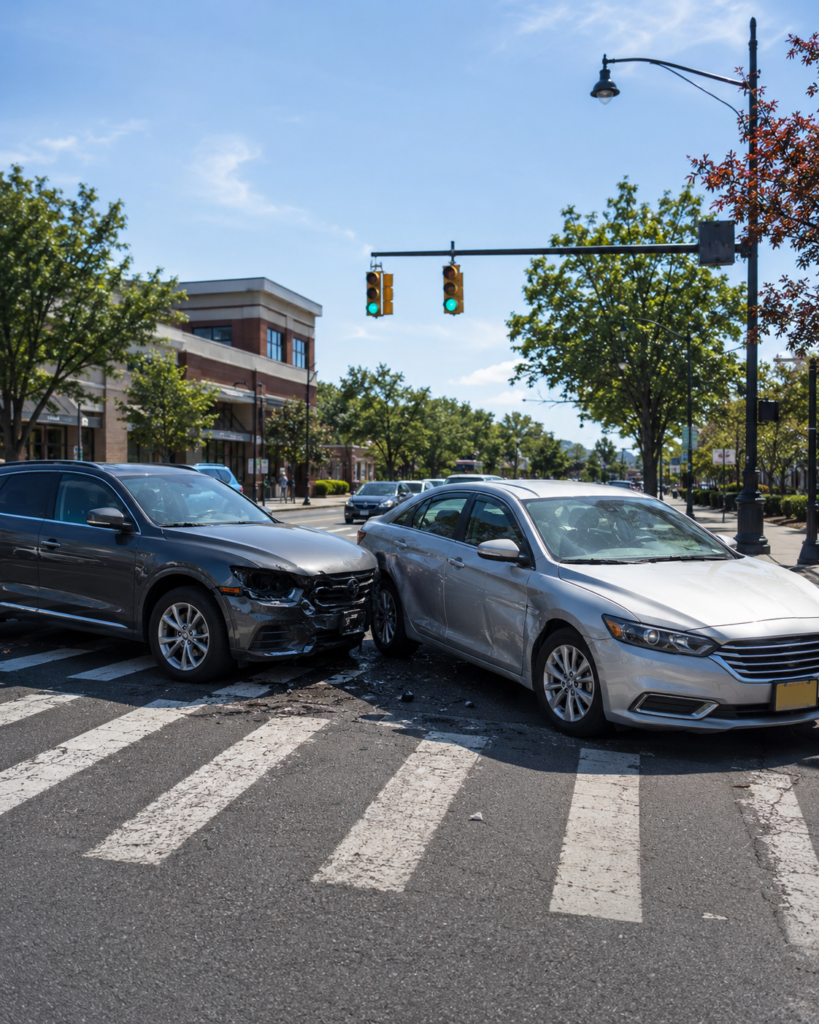
    What Does a Car Accident Lawyer Do After a Crash in New York?

    Car accident lawyer long island

    A car accident lawyer does much more than send a demand letter. In a serious New York crash case, the attorney can investigate how the collision happened, preserve evidence, identify every potentially responsible party and insurance policy, coordinate no-fault and liability issues, document the full extent of the injuries and financial losses, negotiate from an evidence-based position, and file and litigate a lawsuit when necessary.

    Key Takeaways

    • A car accident lawyer can begin preserving evidence before video, vehicle data, witness information, and physical conditions disappear.

    • New York car accident cases can involve both no-fault benefits and a separate liability claim, so insurance coordination is often part of the work.

    • The lawyer develops both sides of the case: why the defendant is legally responsible and how the injuries have affected the client medically, financially, and personally.

    • Not every minor collision requires a lawyer, but serious injuries, disputed fault, multiple vehicles, commercial defendants, inadequate insurance, or pressure from an insurer can make legal representation more important.

    • At Marks Law Group, Harris Marks personally leads major stages of serious injury matters from investigation through litigation strategy.

    In This Guide

      The Work Starts With Understanding What Actually Happened

      In a serious crash, the first legal question is not simply who received a traffic ticket. A claim has to be built from evidence. That can include photographs, police and incident records, witness accounts, surveillance footage, vehicle damage, electronic vehicle data, roadway conditions, phone records where legally obtainable, and testimony from the people involved.

      Timing matters because some evidence is temporary. Storefront or building surveillance may be overwritten. Vehicles can be repaired or destroyed. Witnesses can become harder to locate. A lawyer can identify what needs to be preserved and send appropriate preservation requests before the evidentiary picture changes.

      This early work is one reason people with substantial injuries may benefit from speaking with counsel before assuming the insurance company will gather everything needed for the injured person. For an overview of the firm’s approach to motor-vehicle cases, see Marks Law Group’s car accident representation.

      A Car Accident Lawyer Investigates Liability – Not Just the Police Report

      Police reports are useful, but they are not the entire case. A lawyer may compare the report with physical damage, photographs, roadway markings, witness statements, traffic-signal information, available video, and testimony developed later in litigation.

      In multi-vehicle collisions, the investigation may also focus on the sequence of impacts and whether more than one driver contributed to the crash. In a commercial-vehicle case, additional parties may need to be evaluated, such as an employer, vehicle owner, maintenance provider, or another company connected to the vehicle or trip.

      The goal is to identify every legally supportable theory of responsibility rather than accepting the first version of events presented by an insurer.

      The Lawyer Also Maps the Available Insurance Coverage

      New York motor-vehicle claims often involve more than one insurance issue. The New York Department of Financial Services explains that basic no-fault, or Personal Injury Protection, is intended to pay certain economic losses regardless of fault, while liability insurance addresses claims against a legally responsible driver.

      A lawyer may therefore need to determine which carrier handles no-fault benefits, which liability policies may apply, whether the vehicle owner and driver have different coverage, and whether uninsured or underinsured motorist coverage could become important. These questions can matter greatly when the injuries are serious or the available liability limits are uncertain.

      For a deeper explanation of how the system works, see is New York a No-Fault State for Car Accidents?.

      A public-project deadline may be measured in days, not years. Get the timeline reviewed now

      Request a free review from Harris Marks. Get honest, case-specific answers.

      Documenting the Injury Is a Separate Part of the Case

      Proving that another driver caused a crash is only half of a serious injury claim. The lawyer must also develop evidence showing what the collision caused.

      That can involve medical records, diagnostic imaging, operative reports, treating-provider opinions, rehabilitation records, employment documentation, tax or wage records, photographs, testimony about functional limitations, and expert analysis when future medical care or earning capacity is disputed.

      A well-developed damages presentation should explain not only the bills already incurred, but also the long-term consequences that can reasonably be proven. That is particularly important when an injury affects future work, mobility, independence, or the need for ongoing care.

      Handling Insurance Communications and Settlement Negotiations

      Insurance adjusters investigate claims for the insurer. An injured person should understand that a request for a recorded statement, medical authorization, broad document production, or early settlement is part of a claims process with competing interests.

      A car accident lawyer can communicate with the relevant carriers, organize the evidence, evaluate what information should be provided, identify unresolved coverage issues, and present the claim in a way that connects liability evidence to documented damages.

      The value of a lawyer is not simply “asking for more money.” The work is building enough reliable evidence to evaluate whether a settlement proposal reasonably accounts for the provable losses and the risks on both sides. If you are deciding whether representation is justified in your situation, see Is It Worth Hiring an Attorney After a Car Accident?.

      What Happens If the Case Does Not Settle?

      If a fair resolution cannot be reached, a lawyer may file a lawsuit and move the case into formal litigation. The work can include drafting pleadings, serving and responding to discovery demands, obtaining records, conducting depositions, retaining appropriate experts, addressing motions, preparing witnesses, negotiating during litigation, and preparing the matter for trial.

      Trial preparation is not limited to the weeks before a courtroom appearance. Decisions made early – what evidence is preserved, which defendants are named, which experts are consulted, and how the medical and economic proof is developed – can shape the strength of the case later.

      Harris L. Marks, Esq. describes his approach as preparing serious injury matters with litigation in mind from the outset and remaining personally involved in investigation, discovery, depositions, settlement strategy, expert development, and trial preparation.

      When Is Calling a Car Accident Lawyer Most Important?

      Not every fender-bender requires counsel. A person with no physical injury, straightforward property damage, and no meaningful dispute may be able to handle the insurance process without retaining a personal injury attorney.

      Legal advice becomes more important when the crash causes significant injury, hospitalization or surgery; fault is disputed; multiple vehicles or defendants are involved; the injured person may have permanent limitations; substantial wages have been lost; the available insurance is unclear; a commercial vehicle is involved; the insurer is requesting a recorded statement or broad authorization; or a settlement offer is being discussed before the long-term medical picture is known.

      If you are unsure whether your situation has reached that point, a consultation can be used to identify the issues before you decide how to proceed. Marks Law Group offers a free case review for serious personal injury matters.

      Frequently Asked Questions

      Quick answers to the questions families ask most.

      Does a car accident lawyer deal with the insurance company?
      Yes. A lawyer can communicate with the relevant insurers, address claim and coverage issues, organize supporting documentation, respond to requests for information, and negotiate a liability claim. In New York, the attorney may also need to coordinate liability issues with the separate no-fault process.
      How soon after a crash should I speak with a lawyer?
      There is no single deadline for calling a lawyer, but early advice can matter when evidence is time-sensitive, injuries are serious, fault is disputed, a commercial or government vehicle is involved, or an insurer is requesting statements or documents. Legal filing deadlines also vary by claim and defendant.
      What evidence can a car accident lawyer look for?
      Potential evidence can include police and incident reports, photographs, video, witness statements, vehicle damage, electronic vehicle data, roadway or traffic-signal information, medical records, wage documentation, insurance records, and expert analysis when appropriate.
      Does hiring a car accident lawyer mean the case will go to trial?
      No. Many claims resolve without trial. A lawyer can negotiate while also preparing the evidence needed if litigation becomes necessary. Trial preparation can strengthen decision-making even when a case ultimately settles.
      How does Marks Law Group handle serious car accident cases?
      Harris Marks personally leads major stages of serious injury matters, including investigation, pleadings, discovery, depositions, negotiation, expert development, and trial strategy. The firm is based in Great Neck and represents serious injury clients throughout Nassau County, Long Island, New York City, and other areas served by the firm.
       
      HM

      Harris Marks, Esq.

      Harris Marks is a trial attorney focused on serious injury and wrongful death cases across Nassau County, Great Neck, and Long Island, leading high-value litigation from investigation through trial. Read his background →

      Injured in a Serious New York Car Accident?

      If the crash caused significant injuries, disputed liability, substantial time out of work, or difficult insurance questions, Marks Law Group can review the evidence, coverage, deadlines, and legal options in a free consultation.

      How Long Do You Have to File a Construction Accident Claim in New York?

      Key Takeaways

      • A New York personal-injury lawsuit is generally subject to a three-year statute of limitations.

      • Claims against many public entities may require a Notice of Claim within 90 days and an action within one year and 90 days.

      • Workers’ compensation generally requires notice to the employer within 30 days and filing a claim within two years, subject to exceptions.

      • The time to investigate is shorter than the legal deadline because evidence can disappear immediately.

      • The correct deadline depends on the defendant, claim, injury, age, and other case-specific facts.

      In This Guide

        In many New York construction accident cases, the general deadline for a personal-injury lawsuit is three years from the accident. That rule is only a starting point.

        Shorter notice and filing periods may apply when a city, county, town, village, school district, public authority, or another government-related defendant is involved. Workers’ compensation also has its own deadlines. The firm’s guide on what to do after a construction accident explains the immediate reporting and evidence steps. For case-specific representation, review the Long Island construction accident practice page.

        The General Three-Year Deadline for a Personal-Injury Lawsuit

        New York CPLR §214 generally requires an action to recover damages for personal injury to be commenced within three years. Claims under Labor Law §§200, 240, and 241 arising from a construction injury are commonly filed within that personal-injury period.

        Waiting until the end of the period is risky. The defendants must be identified, evidence preserved, medical proof developed, and the correct court papers prepared before filing.

        Claims Against Municipal and Public Defendants

        When a tort claim is brought against certain public corporations, General Municipal Law §50-e generally requires service of a Notice of Claim within 90 days after the claim arises. General Municipal Law §50-i generally requires the lawsuit to be started within one year and 90 days after the event, with separate treatment for wrongful death.

        Different authorities and public entities can have their own statutes. A public construction project should therefore be reviewed immediately rather than assuming the ordinary three-year rule controls.

        A public-project deadline may be measured in days, not years. Get the timeline reviewed now

        Request a free review from Harris Marks. Get honest, case-specific answers.

        Workers’ Compensation Deadlines

        Workers’ Compensation Law §18 generally calls for notice of the injury to the employer within 30 days. Section 28 generally requires a compensation claim to be filed within two years after the accident, subject to exceptions and waiver issues.

        These deadlines are separate from the deadline for a third-party construction accident lawsuit. Reporting the injury to a supervisor does not automatically file a civil action, and filing a compensation claim does not automatically preserve a Labor Law case.

        What Can Change the Deadline?

        • The identity and legal status of each defendant.
        • Whether the project involved a municipality, authority, school district, or other public entity.
        • The injured person’s age or legal disability.
        • The date the claim legally accrued.
        • Whether the case involves wrongful death, product liability, or another distinct theory.
        • Court orders, statutory tolls, prior filings, or other procedural facts.

        Because tolls and exceptions are technical, they should not be assumed without a legal review.

        Why the Evidence Deadline Is Earlier

        Even when the lawsuit deadline is years away, the practical evidence deadline may be hours or days. Surveillance can be overwritten, equipment repaired, scaffolds moved, witnesses reassigned, and digital records lost.

        Early preservation letters, inspections, photographs, witness interviews, and contract requests can determine whether the case can be proven later.

        How Long Does the Lawsuit Take After Filing?

        The statute of limitations controls when the lawsuit must start, not when it will finish. After filing, the case may proceed through pleadings, document exchange, depositions, expert work, motions, mediation, and trial.

        Some cases resolve in months; complex or contested cases can take years. Trial preparation can improve settlement leverage, but no attorney can guarantee a timeline. The separate guide to construction accident compensation and settlements explains how negotiations can occur at different litigation stages.

        The Safest Approach

        Assume the shortest plausible deadline until the parties and project are fully investigated. The name printed on a hard hat or paycheck may not identify every owner, contractor, public authority, or corporate entity that must receive notice or be sued. Identifying every potentially liable construction party is therefore part of the deadline analysis.

        Frequently Asked Questions

        Quick answers to the questions families ask most.

        Is the Labor Law §240 statute of limitations three years?
        A Labor Law §240 personal-injury action is generally governed by New York’s three-year personal-injury limitations period, but shorter notice and filing rules can apply depending on the defendant and facts.
        How long do I have to file against a city or county?
        Many municipal tort claims require a Notice of Claim within 90 days and commencement of the action within one year and 90 days. The exact entity and statute must be checked.
        Does a workers’ compensation claim preserve my lawsuit deadline?
        No. Workers’ compensation and a third-party civil action have separate procedures and deadlines.
        What if I missed a deadline?
        Do not assume the claim is over. Limited exceptions, tolls, late-notice procedures, or other claims may exist, but immediate legal review is necessary.

        Confirm the Deadline Before Evidence or Rights Are Lost

        Deadline analysis begins with identifying every responsible party. Marks Law Group’s Long Island construction accident practice reviews the project, public-entity involvement, compensation status, and applicable statutes so the correct notices and claims can be addressed promptly.

        HM

        Harris Marks, Esq.

        Harris Marks is a trial attorney focused on serious injury and wrongful death cases across Nassau County, Great Neck, and Long Island, leading high-value litigation from investigation through trial. Read his background →

        Get a construction accident deadline review in a free consultation.

        What to Do After a Construction Accident in NY

        Quick Answer

        After a New York construction accident, prioritize medical care and immediate safety, report the incident through the worksite process, preserve photographs and information about the scene/equipment, identify witnesses and all companies on the project, save medical and employment records, and promptly review both workers’ compensation and possible third-party claims. Construction sites change quickly, so evidence preservation should not wait for symptoms or paperwork to “settle down.”

        Key Takeaways

        • Get appropriate medical care and make sure the history accurately describes how the work accident happened.
        • Report the accident, but avoid guessing about facts you do not know or signing broad releases without understanding them.
        • Preserve photographs, video, equipment identification, witness names, and contractor/company information before the site changes.
        • Workers’ compensation and a third-party Labor Law or negligence claim may both need to be evaluated.
        • Do not rely on a general three-year rule because public-entity notices, workers’ compensation requirements, and evidence-preservation needs can arise much earlier.

        In This Guide

          1. Get Medical Care and Address Immediate Safety

          Serious construction injuries can worsen after the initial event. Emergency care, follow-up evaluation, and compliance with medical instructions serve the health issue first. The medical history should accurately identify when and how the injury occurred.

          A worker should not exaggerate or minimize symptoms for the sake of a claim. Consistent, accurate medical documentation helps doctors treat the injury and later helps distinguish accident-related conditions from unrelated history.

          2. Report the Accident Through the Worksite Process

          Notify the appropriate employer or supervisor as soon as practicable and follow the site’s incident-reporting process. Ask for a copy of any incident report you are permitted to receive and write down who was notified, when, and how.

          Be factual. If you did not see why a scaffold shifted or who moved a piece of equipment, do not guess. Early reports can become important evidence, and assumptions made in the first hours can create unnecessary disputes later.

          3. Preserve the Scene, Equipment, and Visual Evidence

          If it can be done safely, photographs and video should document the accident area, the device or equipment involved, the surrounding conditions, warning signs, floor or elevation conditions, and anything that changes after the incident. Record identifying information such as manufacturer labels or serial numbers when relevant.

          Construction sites are temporary environments. Guardrails are installed, debris is removed, openings are covered, ladders disappear, and equipment is returned. Preservation notices and prompt inspection can be more important than relying on memory months later.

          Evidence can disappear quickly. Request an immediate construction-accident review.

          Request a free review from Harris Marks. Get honest, case-specific answers.

          4. Identify Witnesses and Every Company on the Site

          Record names and contact information for coworkers and other witnesses. Also identify the general contractor, property owner, construction manager, subcontractors, equipment providers, and any other companies connected to the area or task.

          This information helps build the responsibility map needed for a third-party claim. For the liability framework, see Who Is Liable for a Construction Site Accident?

          5. Preserve Work and Wage Records

          Save pay stubs, union records, work schedules, time records, tax documents, benefit statements, job classifications, and communications about work restrictions or return-to-work status. These records can become important for workers’ compensation and for proving wage loss or reduced earning capacity in a third-party case.

          Also preserve text messages, emails, photographs, and instructions related to the task or equipment. Do not edit or selectively delete communications once litigation is reasonably anticipated.

          6. Evaluate Workers’ Compensation and Third-Party Claims Together

          Workers’ compensation may provide medical and wage-related benefits through the employer system. A separate third-party case can exist when an owner, contractor, subcontractor, equipment company, or other non-employer bears legal responsibility.

          New York Labor Law §§ 200, 240, and 241 can materially change that analysis. Read Can You Sue After a Construction Accident in New York? for the distinction.

          7. Be Careful With Recorded Statements, Releases, and Social Media

          Insurers and investigators may request statements while the facts and medical picture are still developing. Provide required information through the appropriate process, but understand who is asking, what claim the statement concerns, and whether you are being asked to sign a release that affects rights beyond the immediate benefit.

          Social-media posts can also become evidence. Avoid posting accident reconstructions, medical conclusions, or activity that can be taken out of context while a claim is being investigated.

          8. Review Deadlines Early

          Many New York personal-injury actions have a three-year limitations period under CPLR 214, but that is not a universal construction-accident deadline. Public-entity claims can trigger a 90-day notice requirement under General Municipal Law § 50-e, and workers’ compensation has separate rules.

          Our deadline guide explains how long you may have to file a construction accident claim.

          Frequently Asked Questions

          Quick answers to the questions families ask most.

          Should I take photographs if I am badly injured?
          Health and safety come first. If you cannot safely document the scene, a coworker, family member, investigator, or attorney may be able to help preserve information later. Do not put yourself at additional risk for evidence.
          Should I sign the employer’s incident report?
          Read it carefully and make sure it is factually accurate. Do not guess about facts you do not know. If the document includes a release or legal waiver rather than a simple incident report, get legal advice before signing.
          What if the site changes before I can photograph it?
          Other evidence may still exist, including surveillance, project photographs, daily logs, inspection records, witness testimony, and contractor records. Prompt preservation requests can matter.
          Can I talk to the workers’ compensation insurer?
          You may need to provide information for the compensation claim. The important point is to understand which insurer is contacting you, what claim it is handling, and whether a request could affect a separate third-party case.
          When should I contact a construction accident lawyer?
          Early review is especially useful when injuries are serious, the site involves multiple contractors, a public entity may be involved, equipment failed, the accident involved elevation, or responsibility is disputed.

          Review your rights, deadlines, and possible third-party claims in a free consultation.

          Construction Accident Compensation, Damages, and Settlements in New York

          Quick Answer

          Compensation after a New York construction accident can come from more than one legal system. Workers’ compensation may cover medical care and wage-related benefits, while a viable third-party lawsuit may seek broader civil damages such as pain and suffering, lost earning capacity, and future care. Settlement value depends on liability, injuries, prognosis, economic proof, insurance, liens, and the strength of the evidence—not on an online “average settlement.”

          Key Takeaways

          • Workers’ compensation benefits and third-party lawsuit damages should be analyzed separately.
          • A third-party case may seek categories of damages that workers’ compensation does not provide in the same way, including pain and suffering.
          • Future medical care and lost earning capacity require evidence, often including medical and economic expert analysis.
          • Workers’ Compensation Law § 29 can create reimbursement/lien issues against a third-party recovery.
          • No internet average can responsibly predict the value of a specific construction-accident case.

          In This Guide

            Two Potential Sources of Recovery

            After a construction accident, the first system is often workers’ compensation. It can provide statutory medical and wage-related benefits without requiring a negligence lawsuit against the employer. The second potential system is a third-party civil claim against a legally responsible non-employer.

            The two systems interact but are not substitutes for one another. A worker may receive compensation benefits while a third-party claim is investigated under negligence, product-liability, or New York Labor Law theories.

            What Workers’ Compensation Can Provide

            Workers’ compensation can cover authorized medical treatment and wage-related disability benefits according to the Workers’ Compensation Law and the facts of the claim. The benefit structure is statutory and does not operate like a jury award for pain and suffering.

            Because an employer generally receives exclusive-remedy protection under Workers’ Compensation Law § 11, the search for broader civil damages usually focuses on whether a valid third-party defendant exists.

            What a Third-Party Lawsuit Can Seek

            Depending on the case, a civil claim may seek compensation for past and future pain and suffering, lost wages and reduced earning capacity, medical and rehabilitation needs, future care, and other legally recoverable losses. The categories depend on the injury and cause of action.

            The first question is liability: can a third-party lawsuit be brought? Only then does the case-value analysis make sense.

            Get a case-specific explanation of which compensation sources may apply.

            Request a free review from Harris Marks. Get honest, case-specific answers.

            How Lost Earnings and Earning Capacity Are Proven

            Past lost wages can often be documented through payroll, tax records, union records, disability records, and employer testimony. Future earning-capacity loss requires a forward-looking analysis of the worker’s restrictions, career path, age, occupation, education, and realistic alternative employment.

            Serious cases may use vocational and economic experts to connect medical restrictions to future work limitations and calculate the financial impact. The goal is evidence-based projection, not speculation.

            How Future Medical and Care Needs Affect Damages

            A serious injury can require surgery, therapy, medication, assistive equipment, home modifications, or long-term care. Future damages should be tied to reliable medical opinions and a defensible life-care or cost analysis when appropriate.

            Medical records describing current symptoms are not always enough to prove decades of future expense. The evidence needs to explain why future treatment is reasonably expected and what it is likely to cost.

            What Actually Drives Settlement Value?

            Important variables include the strength of liability, whether a Labor Law statute applies, comparative-fault issues where relevant, permanency and prognosis, wage loss, future care, insurance limits, collectability, venue, witness quality, documentary evidence, and expert support.

            The same diagnosis can produce very different case values when liability or future impact differs. That is why asking for the “average ladder-fall settlement” or “average construction accident settlement” can mislead rather than inform.

            How Workers’ Compensation Liens Affect the Net Recovery

            Workers’ Compensation Law § 29 provides subrogation and reimbursement rights when an injured worker recovers against a third party. The carrier’s lien can affect what the worker nets from the civil settlement.

            Settlement strategy should account for the lien, any required consent, future benefit consequences, litigation expenses, and attorney fees. Gross settlement value and net client recovery are different numbers.

            Settlement Versus Trial

            A settlement exchanges litigation risk for a negotiated resolution. A trial asks a judge or jury to decide disputed liability and damages. Neither path is automatically “better”; the decision should compare the offer with the evidence, likely range of outcomes, time, costs, liens, and client priorities.

            A case that is prepared for trial can often be evaluated more intelligently in settlement because the parties understand the evidence that would actually be presented if negotiations fail.

            Frequently Asked Questions

            Quick answers to the questions families ask most.

            What is the average New York construction accident settlement?
            There is no reliable average that can value an individual case. Liability, injuries, future impact, insurance, liens, venue, and evidence vary too widely.
            every situation is different — an attorney can review the specific facts.
            Can I recover pain and suffering through workers’ compensation?
            Workers’ compensation uses statutory benefits and does not compensate pain and suffering in the same way a third-party civil action can. A separate third-party claim must have a valid legal basis.
            Can I receive both workers’ compensation and a lawsuit settlement?
            Potentially, yes, but Workers’ Compensation Law § 29 can create liens, reimbursement rights, and settlement-consent issues that must be coordinated.
            Do future surgeries increase case value?
            Future treatment can affect damages when it is supported by reliable medical evidence and connected to the accident. A speculative possibility is different from a medically supported future need.
            How do I know whether a settlement offer is fair?
            Compare it with the strength of liability, provable damages, insurance/collectability, liens, litigation risk, costs, timing, and the realistic trial range for the specific evidence—not a generic internet number.

            Learn about our construction accident representation or request a free consultation.

            Who Is Protected by New York Labor Law §240?

            Quick Answer

            Labor Law § 240(1) protects a “person so employed” performing the types of work listed in the statute—such as erection, demolition, repairing, altering, painting, cleaning, or pointing of a building or structure—when the injury arises from the kind of elevation-related risk the statute addresses. Coverage turns more on the task and statutory relationship than on a worker’s job title alone.

            Key Takeaways

            • A worker’s job title does not by itself determine § 240 coverage; the task being performed matters.
            • The work must fit one of the activities listed in § 240(1) and involve the kind of elevation-related protection the statute contemplates.
            • Routine maintenance can fall outside § 240 when it does not constitute protected repairing or altering work.
            • The defendant must also be within the statutory class, such as a qualifying owner, contractor, or agent, subject to exceptions.
            • A covered worker still must prove a statutory violation and proximate cause.

            In This Guide

              Start With the Work Being Performed

              Labor Law § 240(1) lists the work activities to which its protective-device requirement applies. The task at the time of the accident is therefore a threshold issue.

              A person who generally works in construction does not automatically have a § 240 claim for every injury, and a person with a less obvious job title can still be covered if the actual task is protected. Time sheets, work orders, testimony, contracts, photographs, and project plans can help establish what was being done.

              Which Activities Does the Statute List?

              The statute identifies erection, demolition, repairing, altering, painting, cleaning, and pointing of a building or structure. Courts have developed substantial case law around what those terms mean in particular circumstances.

              The distinction between “repairing” and routine maintenance is especially important. Replacing or altering a component as part of a broader repair can present a different analysis from recurring routine maintenance. The facts cannot be reduced to the worker’s label for the task.

              The Accident Must Also Involve a Covered Elevation Risk

              Even protected work does not make § 240 apply to every hazard. In Runner v. New York Stock Exchange, Inc., the Court of Appeals focused on harm flowing from the application of gravity and a physically significant elevation differential.

              Traditional examples include falls from ladders or scaffolds, but the law can also address falling or descending objects when the statutory conditions are met. Slips on a level floor, ordinary vehicle crashes, or other hazards not tied to the elevation-safety purpose of § 240 generally require a different theory.

              Unsure whether your job and task were covered by §240?

              Request a free review from Harris Marks. Get honest, case-specific answers.

              Which Safety Devices Matter?

              Section 240 identifies scaffolds, hoists, stays, ladders, slings, hangers, blocks, pulleys, braces, irons, ropes, and “other devices.” The question is whether the device or protection appropriate to the risk was furnished and operated so as to give proper protection.

              The absence of a particular device is not analyzed in a vacuum. The accident mechanism, task, weight or elevation differential, device condition, placement, anchoring, and available alternative protection can all matter.

              Who Must the Defendant Be?

              Section 240 refers to contractors, owners, and their agents. A company is not a proper statutory defendant simply because its employees were on the same project. Ownership, contracts, authority, and control over the work may be relevant to defendant status.

              The statute also contains an exception for owners of one- and two-family dwellings who contract for but do not direct or control the work. The exception should be analyzed from the actual property and owner conduct, not assumed from an address alone.

              What Situations Commonly Fall Outside § 240?

              Examples can include work that is routine maintenance rather than a protected statutory activity, accidents with no qualifying elevation-related risk, defendants outside the statutory class, or cases in which the device and circumstances do not establish a statutory violation.

              Abbatiello v. Lancaster Studio Associates is one Court of Appeals decision discussing both authorization and routine-maintenance issues. Coverage always depends on the specific facts and current law.

              Can Worker Conduct Defeat a Covered § 240 Claim?

              Worker negligence is not treated exactly like ordinary comparative negligence under § 240, but a worker’s actions can still be decisive. New York cases recognize a sole-proximate-cause defense where the facts satisfy that standard—for example, in some circumstances involving available adequate safety devices that the worker chose not to use without good reason.

              The important distinction is between conduct that contributes to an accident and conduct that is the only legal cause because there was no statutory violation that proximately caused the injury.

              What If § 240 Does Not Apply?

              The absence of a § 240 claim does not mean there is no construction-accident case. Labor Law § 200/common-law negligence, § 241(6), product liability, premises liability, and other third-party theories may still apply, along with workers’ compensation.

              That broader framework is explained in Labor Law § 200 vs. § 240 vs. § 241.

              Frequently Asked Questions

              Quick answers to the questions families ask most.

              Are undocumented workers protected by Labor Law § 240?
              Immigration status is not the same as statutory task coverage. A specific case can involve separate damages and employment issues, so the worker’s status and the § 240 requirements should be analyzed separately by counsel.
              Does § 240 protect delivery workers?
              Sometimes, but not simply because delivery occurred at a construction site. Coverage depends on the worker’s task and its connection to protected statutory work.
              Is cleaning always covered?
              No. New York courts distinguish qualifying cleaning from ordinary household or routine cleaning in different contexts. The nature of the work and risk matters.
              Is routine maintenance protected?
              Routine maintenance can fall outside § 240. Whether the task constitutes repairing or altering instead of routine maintenance depends on the specific work being performed.
              Can I have another claim if § 240 does not apply?
              Yes. Workers’ compensation, Labor Law § 200, Labor Law § 241(6), negligence, premises liability, product liability, and other theories may still need to be investigated.

              Explore our construction practice, or request a consultation.

              Learn about our construction accident representation or request a free consultation

              Who Is Liable for a Construction Site Accident?

              Quick Answer

              There is no single party automatically liable for every New York construction accident. The worker’s employer is generally addressed through workers’ compensation, while property owners, general contractors, subcontractors, agents, equipment companies, and other third parties can face civil liability depending on their role, control, notice, conduct, and duties under common law or New York Labor Law.

              Key Takeaways

              • Start by separating the direct employer from potential third-party defendants.
              • Workers’ Compensation Law § 11 generally makes workers’ compensation the exclusive remedy against the employer, subject to exceptions.
              • Owners and general contractors can face statutory duties under Labor Law §§ 240 and 241 even when they did not directly employ the injured worker.
              • Labor Law § 200 and common-law negligence can turn on control of the work or notice/creation of a dangerous condition.
              • Contracts, project hierarchy, site records, photographs, witness testimony, and equipment evidence help determine who actually had legal responsibility.

              In This Guide

                Build a Responsibility Map Before Naming Defendants

                A construction project can involve a property owner, developer, general contractor, construction manager, multiple subcontractors, the worker’s employer, equipment vendors, design professionals, and public entities. Their names on the same jobsite do not make their duties identical.

                A good investigation creates a responsibility map: who owned the property, who contracted for the work, who hired whom, who controlled the injury-producing activity, who knew about the condition, and which entity had authority over safety or equipment.

                The Employer: Usually Workers’ Compensation, Not a Negligence Lawsuit

                Workers’ Compensation Law § 11 generally makes the employer’s workers’ compensation liability exclusive. That usually means an injured worker does not bring an ordinary negligence action against the direct employer.

                There are statutory exceptions, and corporate/employment relationships can be disputed, so the identity of the actual employer should be verified. But in many construction cases, the civil lawsuit focuses on non-employer third parties.

                Property Owners and General Contractors

                Property owners and general contractors can be important defendants because New York Labor Law imposes duties on qualifying owners, contractors, and agents. Under Labor Law § 240, the issue may be elevation-related protection during specified work. Under § 241, the analysis may involve construction, excavation, demolition, and applicable Industrial Code rules.

                Defendant status is still fact-specific. The homeowner exception in the statutes and questions about who qualifies as an “agent” can change the result.

                Do not stop the investigation at the direct employer

                Owners, contractors, subcontractors, equipment companies, and other parties can have different duties. The project structure should be mapped before potential defendants disappear from view.

                Construction Managers, Subcontractors, and Statutory Agents

                A construction manager or subcontractor is not automatically liable simply because it was present. The analysis can include whether it had authority to supervise or control the injury-producing work, whether it created a dangerous condition, whether it had notice, and whether it qualifies as a statutory agent for the claim asserted.

                Contracts and testimony about actual practice both matter. A contract may grant authority that a witness minimizes later, or a company may exercise real control beyond what a broad job title suggests.

                Labor Law § 200 and Common-Law Negligence

                Labor Law § 200 states the general workplace-safety duty. New York cases commonly distinguish accidents caused by the means and methods of the work from accidents caused by dangerous premises conditions.

                For means-and-methods cases, supervision or control can be central. For dangerous-condition cases, creation of the hazard or actual/constructive notice can be central. The evidence should be organized around the category that matches the accident.

                Equipment Manufacturers, Rental Companies, and Other Outside Parties

                Some accidents involve defective or improperly maintained equipment, delivery vehicles, cranes, lifts, tools, or components supplied by companies outside the contractor hierarchy. Those facts can support negligence, product-liability, maintenance, or other claims separate from the Labor Law theories.

                Preserve the product identification, serial numbers, maintenance history, rental records, photographs, and the equipment itself when possible. Once equipment is repaired, returned, or discarded, the proof can become much harder to reconstruct.

                Can More Than One Party Be Liable?

                Yes. A case can involve overlapping duties. For example, an owner may face a statutory Labor Law theory, a contractor may have controlled the work, and an equipment company may have supplied a defective device. Liability can be allocated differently depending on the claim.

                This is why an early “one company caused it” conclusion can be dangerous. The project documents and physical evidence should be reviewed before responsible parties are ruled in or out.

                What Evidence Reveals Who Was Responsible?

                Key materials can include ownership records, prime contracts and subcontracts, daily logs, safety plans, inspection reports, incident reports, meeting minutes, photographs/video, site access records, equipment records, witness testimony, and communications about the condition or task.

                For an overview of the statutory theories that may attach to those roles, see Labor Law § 200 vs. § 240 vs. § 241.

                Frequently Asked Questions

                Quick answers to the questions families ask most.

                Is the general contractor always liable?
                No. Liability depends on the legal theory, statutory role, control, conduct, and facts. Some Labor Law duties can be nondelegable, but the statute still must apply and the defendant must fall within it.
                Can the property owner be liable even if it did not supervise me?
                Potentially. Certain Labor Law duties can apply to qualifying owners without ordinary supervision of the worker, while other theories require different proof. Property type and statutory exceptions also matter.
                Can I sue a subcontractor that was not my employer?
                Potentially, if its conduct, control, dangerous condition, equipment, or statutory role supports a claim. Presence on the project alone is not enough.
                What if a defective machine caused the injury?
                The investigation should identify the manufacturer, seller, rental company, maintenance history, and any entity that altered or serviced the equipment. Product and negligence theories may exist in addition to construction-law claims.
                Why are contracts important?
                Contracts can show who had authority, safety responsibilities, indemnity obligations, and control over particular work. They are not always the complete answer, but they are an important part of the responsibility map.

                Explore our construction practice, or request a consultation.

                Learn about our construction accident representation or request a free consultation

                Can You Sue After a Construction Accident in New York?

                Quick Answer

                Sometimes. Workers’ compensation is generally the exclusive remedy against an employer under Workers’ Compensation Law § 11, but an injured worker may have a separate third-party claim against a property owner, general contractor, subcontractor, equipment company, or another responsible party when the law and facts support it. New York Labor Law §§ 200, 240, and 241 can create important theories against qualifying non-employer defendants.

                Key Takeaways

                • Workers’ compensation and a third-party construction lawsuit are different systems and can exist at the same time.
                • Workers’ Compensation Law § 11 generally limits lawsuits against the worker’s employer, subject to statutory exceptions.
                • Workers’ Compensation Law § 29 preserves third-party remedies and creates important reimbursement/lien issues.
                • Property owners, general contractors, subcontractors, and other entities may be potential defendants depending on their legal role and conduct.
                • Labor Law coverage depends on the task, hazard, defendant status, safety rules, and causation—not simply the fact that the worker was injured on a construction site.

                In This Guide

                  Workers’ Compensation and a Lawsuit Are Not the Same Thing

                  Workers’ compensation generally provides medical and wage-related benefits without requiring the worker to prove that the employer was negligent. A third-party lawsuit is different: it seeks civil damages from a legally responsible party and generally requires proof of the applicable liability theory.

                  Because the systems serve different purposes, receiving workers’ compensation does not automatically mean the worker has no civil claim. The key question is whether a person or entity other than the protected employer can be held legally responsible.

                  Why You Usually Do Not Sue Your Employer

                  Workers’ Compensation Law § 11 states that an employer’s workers’ compensation liability is generally exclusive and replaces other liability to the employee and certain related persons, subject to statutory exceptions.

                  That employer protection is why a construction lawsuit often focuses on third parties such as an owner or general contractor rather than simply naming the direct employer. The corporate relationships should be checked carefully; companies with similar names or shared ownership are not automatically the same legal entity.

                  Who Can Be a Third-Party Defendant?

                  Potential third parties can include property owners, general contractors, construction managers or agents, subcontractors other than the direct employer, equipment manufacturers or rental companies, vehicle owners/drivers, and other entities whose conduct or statutory role contributed to the accident.

                  Not every participant is liable. Contracts, control over the work, ownership, notice of hazards, safety responsibilities, product evidence, and statutory definitions all matter. Our guide to construction-site liability explains the responsibility map in more detail.

                  Workers’ compensation does not answer the third-party question

                  The employer, owner, general contractor, subcontractors, equipment companies, and other participants should be mapped before assuming workers’ compensation is the only remedy.

                  How New York Labor Law Can Create Third-Party Claims

                  Labor Law § 200 addresses workplace safety and negligence. § 240(1) addresses specified work and elevation-related safety devices. § 241 governs construction, excavation, and demolition safety, with § 241(6) claims often turning on specific Industrial Code requirements.

                  These provisions can impose duties on qualifying owners, contractors, and agents even when the injured worker is employed by a subcontractor. Read our § 200 vs. § 240 vs. § 241 comparison for the differences.

                  What Can a Third-Party Lawsuit Recover?

                  A civil lawsuit can potentially seek damages beyond the wage and medical benefits available through workers’ compensation. Depending on the case, that can include pain and suffering, lost earnings and earning capacity, future medical and care needs, and other legally recoverable losses.

                  The amount depends on proof. A serious injury alone does not establish full case value; liability, causation, future prognosis, economic evidence, insurance, liens, and collectability all affect the analysis. See construction accident compensation and damages.

                  How Workers’ Compensation Liens Affect a Third-Party Recovery

                  Workers’ Compensation Law § 29 addresses third-party remedies and subrogation. When compensation benefits have been paid, the compensation carrier can have reimbursement rights against a third-party recovery.

                  This does not mean the lawsuit is pointless. It means the lien and future workers’ compensation consequences should be included in settlement analysis rather than discovered at the end. Consent and settlement issues under § 29 can also be important.

                  What Should You Do Immediately After the Accident?

                  Get appropriate medical care, report the accident through the worksite process, preserve photographs/video if it is safe to do so, identify witnesses and companies on the site, save equipment information and work communications, and avoid signing a broad release without understanding what rights it affects.

                  Construction sites can change within hours. A practical preservation checklist is available in What to Do After a Construction Accident in NY.

                  How Long Do You Have to Sue?

                  Different clocks can apply. Many New York personal-injury actions have a three-year limitations period under CPLR 214, but public-entity notices and actions can have shorter timing rules, and workers’ compensation has its own procedural deadlines.

                  Do not use the three-year rule as a universal answer. Our detailed guide explains construction accident filing deadlines in New York.

                  Talk to a Construction Accident Attorney About Every Available Claim

                  A workers’ compensation filing should not be the end of the investigation. Marks Law Group’s Long Island construction accident practice examines the full project structure, contracts, safety responsibilities, and statutory duties to determine whether a separate lawsuit is available.

                  Frequently Asked Questions

                  Quick answers to the questions families ask most.

                  Can I collect workers’ compensation and still sue?
                  Potentially, yes. Workers’ Compensation Law § 29 recognizes third-party remedies while workers’ compensation benefits are being paid, subject to lien, consent, and other statutory rules.
                  Can I sue my employer for negligence?
                  Workers’ Compensation Law § 11 generally makes workers’ compensation the exclusive remedy against the employer, subject to statutory exceptions. The potential civil case often focuses on non-employer parties.
                  Can I sue the general contractor?
                  Possibly. Liability depends on the contractor’s statutory role, control, conduct, the work being performed, and the legal theory. General-contractor status should be verified rather than assumed.
                  What if I caused part of the accident?
                  The effect of worker conduct depends on the claim. Comparative negligence can matter in negligence and § 241(6) theories; § 240 has a different framework in which a worker’s conduct may defeat the claim if it is the sole proximate cause.
                  Do I have to choose between workers’ compensation and a lawsuit?
                  Not necessarily. The systems can coexist, but they interact through reimbursement and consent rules. A coordinated strategy is important.

                  Find Out Whether a Third-Party Construction Claim Exists

                  Marks Law Group can review the site relationships, contracts, accident evidence, and Labor Law issues alongside the workers’ compensation claim.

                  New York Labor Law §200 vs. §240 vs. §241: What Is the Difference?

                  Quick Answer

                  New York Labor Law §§ 200, 240, and 241 address different construction-safety theories. Section 200 reflects the general duty to provide a reasonably safe workplace and often turns on supervision/control or notice of a dangerous condition. Section 240(1) focuses on specified work involving elevation-related risks and proper safety devices. Section 241 addresses construction, excavation, and demolition safety; civil claims under § 241(6) commonly depend on an applicable, sufficiently specific Industrial Code provision.

                  Key Takeaways

                  • Section 200 is closely tied to common-law negligence and generally focuses on unsafe work methods or dangerous premises conditions.
                  • Section 240(1) addresses specified work and gravity-related risks requiring proper elevation safety devices.
                  • Section 241(6) can impose a nondelegable duty based on violations of sufficiently specific Industrial Code rules applicable to construction, excavation, or demolition.
                  • The same accident can support more than one Labor Law theory if the facts satisfy each theory separately.
                  • The correct statute cannot be determined from the injury alone; the work, hazard, defendants, control, notice, and safety rules all matter

                  In This Guide

                    The Three Statutes Solve Different Safety Problems

                    Construction cases are often described as “Labor Law cases,” but that label can hide important differences. § 200, § 240, and § 241 address different duties and therefore require different evidence.

                    That matters immediately after an accident. A lawyer investigating a defective staircase should ask different questions from one investigating an unsecured ladder or a trench condition governed by a specific Industrial Code rule.

                    Labor Law § 200: General Workplace Safety and Negligence

                    Labor Law § 200 states a general duty to provide reasonable and adequate protection to people employed in or lawfully frequenting covered places. New York courts treat § 200 as closely connected to common-law negligence principles.

                    Cases often fall into two broad categories: injuries arising from the means and methods of the work, where supervision or control can be important, and injuries arising from a dangerous premises condition, where creation of the condition or actual/constructive notice can become central. Contracts, site authority, witness testimony, inspection records, and proof about who controlled the injury-producing work can be critical.

                    Labor Law § 240(1): Elevation-Related Safety

                    Section 240(1) applies to specified work and requires certain owners, contractors, and agents to provide proper devices for elevation-related risks. The statute identifies devices including scaffolds, hoists, ladders, slings, and ropes.

                    The New York Court of Appeals has made clear that § 240 does not apply to every construction accident or every effect of gravity. A claimant must establish statutory coverage, a violation, and proximate cause. Our full Labor Law § 240 guide explains those requirements.

                    Not sure which Labor Law section applies?

                    Ask in a free consultation with Harris Marks. Get honest, case-specific answers.

                    Labor Law § 241(6): Specific Construction Safety Rules

                    Section 241 applies to construction, excavation, and demolition work and directs owners, contractors, and agents to comply with safety requirements. In civil litigation under § 241(6), the key question is often whether an applicable Industrial Code regulation imposes a sufficiently specific, concrete command.

                    New York appellate decisions, including the Court of Appeals’ discussion of Ross v. Curtis-Palmer Hydro-Electric Co., distinguish concrete regulatory specifications from broad statements of general safety. The precise Industrial Code provision therefore matters, along with whether it applied to the work and whether the violation was a proximate cause of the accident.

                    Side by Side Comparison

                    At a Glance

                    New York Labor Law § 200 vs. § 240(1) vs. § 241(6)

                    These provisions can overlap, but they address different duties,
                    types of hazards, and proof requirements.

                    Can All Three Claims Appear in the Same Lawsuit?

                    Yes, when the facts support them. A worker may allege common-law negligence/§ 200 and statutory claims under §§ 240 and 241 because the theories address different duties. That does not mean every theory survives.

                    During discovery or motion practice, claims can be narrowed when the evidence shows that a statute does not apply, a defendant is not within the protected class, no sufficiently specific Industrial Code rule fits, or causation cannot be established.

                    How Should an Accident Be Investigated for These Claims?

                    Identify the exact task, what caused the injury, the physical condition of the site, all safety devices and instructions, who controlled the work, who owned the property, the contractor hierarchy, and any Industrial Code rule potentially connected to the hazard.

                    Photographs, video, contracts, daily logs, safety meetings, incident reports, equipment, witness statements, and project records can answer different parts of that analysis. See our guide to what to do after a construction accident.

                    Why the Statutory Theory Matters for Case Value and Strategy

                    The available legal theory affects who can be sued, what defenses are available, and how liability may be decided. A strong statutory claim can materially change litigation leverage, while an unsupported statutory allegation can waste time and distract from a viable negligence theory.

                    The strategy should start with the evidence, then match the facts to the law. It should not begin by forcing every construction accident into § 240 simply because the injury happened at a worksite.

                    Frequently Asked Questions

                    Quick answers to the questions families ask most.

                    Is Labor Law § 200 the same as ordinary negligence?
                    Section 200 is closely connected to common-law workplace-safety negligence, but the exact analysis depends on whether the accident involved the manner of the work or a dangerous premises condition.
                    Is Labor Law § 240 always better for an injured worker?
                    No. It is only useful when the work, hazard, defendant, violation, and causation requirements fit. A case can be strong under another theory even if § 240 does not apply.
                    Does § 241(6) require an Industrial Code violation?

                    Civil § 241(6) claims commonly require an applicable sufficiently specific Industrial Code provision. Broad general-safety language is not treated the same as a concrete regulatory command.

                    Can my employer be sued under these statutes?
                    Workers’ Compensation Law § 11 generally makes workers’ compensation the exclusive remedy against an employer, subject to statutory exceptions. Third-party claims against owners, contractors, and others may still be possible.
                    Which statute applies to a ladder fall?
                    A ladder fall may implicate § 240(1), but not automatically. The covered task, device, protection provided, cause of the fall, and defendant status must be analyzed.

                    Talk to a Long Island Construction Accident Attorney

                    Labor Law §240 cases are fact-intensive and heavily defended. Marks Law Group’s Long Island construction accident practice uses a trial-ready approach from the first investigation through settlement or trial.

                    New York Labor Law 240: Scaffold Law Guide | Marks Law Group

                    Quick Answer

                    New York Labor Law § 240(1), often called the Scaffold Law, requires certain owners, contractors, and their agents to provide proper safety devices for workers performing specified types of work involving elevation-related risks. The statute is powerful, but a fall does not automatically create liability: the work and defendant must fall within the statute, there must be a statutory violation, and that violation must be a proximate cause of the injury.

                    Key Takeaways

                    • Labor Law § 240(1) applies to specified work such as erection, demolition, repairing, altering, painting, cleaning, and pointing of a building or structure.
                    • The statute addresses gravity-related risks requiring protective devices such as scaffolds, ladders, hoists, ropes, and other safety devices.
                    • Owners, contractors, and qualifying agents can face a nondelegable statutory duty, subject to statutory exceptions and case-specific defendant status.
                    • A worker must still prove a statutory violation and proximate cause; the accident itself is not enough.
                    • A sole-proximate-cause defense can defeat a § 240(1) claim when the facts satisfy the legal standard.

                    In This Guide

                      What Does Labor Law § 240(1) Require?

                      Labor Law § 240(1) requires covered owners, contractors, and their agents to furnish or erect safety devices—such as scaffolding, hoists, stays, ladders, slings, hangers, blocks, pulleys, braces, irons, ropes, and other devices—so they are constructed, placed, and operated to give proper protection to a person performing the work described in the statute.

                      The core question is not simply whether a worker fell. It is whether the injury resulted from the kind of elevation-related hazard the statute addresses and whether the protection provided was inadequate under the circumstances.

                      Which Types of Work Are Covered?

                      The text of § 240(1) identifies work involving the erection, demolition, repairing, altering, painting, cleaning, or pointing of a building or structure. Coverage often turns on what the worker was actually doing when the accident occurred, not merely the worker’s job title or employer.

                      Routine maintenance can fall outside the statute in circumstances where the task does not qualify as one of the protected activities. That makes the exact task, project purpose, and relationship to the building or structure important. Our companion guide addresses who is protected by Labor Law § 240.

                      What Counts as an Elevation-Related Risk?

                      The New York Court of Appeals has emphasized that § 240(1) protects against specific gravity-related risks rather than every hazard that happens to exist at a construction site. In Runner v. New York Stock Exchange, Inc., the Court focused on whether the injury was the direct consequence of a failure to provide adequate protection against a risk arising from a physically significant elevation differential.

                      That can include a worker falling from an elevation or, in appropriate circumstances, an object falling or moving because of gravity where a safety device of the kind contemplated by the statute was required. The analysis is fact-specific; not every falling object or height difference qualifies.

                      A ladder fall is not enough by itself. Preserve the facts

                      Task, device, defendant status, available protection, and the exact cause of the accident all matter under § 240. Those facts are easier to investigate before the site changes.

                      Does Every Ladder or Scaffold Fall Create Liability?

                      No. In Blake v. Neighborhood Housing Services of New York City, the Court of Appeals explained that an accident alone does not establish a Labor Law § 240(1) violation. A plaintiff must establish a statutory violation and that the violation was a proximate cause of the injury.

                      The condition and placement of the device, whether adequate protection was available, the worker’s instructions, and how the accident happened all matter. Evidence such as photographs, the ladder or scaffold itself, site records, witness accounts, and safety documentation can be critical.

                      Who Can Be Liable Under § 240?

                      The statute expressly refers to owners, contractors, and their agents. Determining whether an entity qualifies can require review of ownership documents, contracts, authority over the work, and the project structure. The statute also includes an exception for owners of one- and two-family dwellings who contract for but do not direct or control the work.

                      Do not assume that every company present on the site is a proper § 240 defendant. A responsibility map should identify the property owner, general contractor, construction manager, subcontractors, and any entity alleged to be an agent. See who can be liable for a construction-site accident.

                      What Is the Sole Proximate Cause Defense?

                      New York courts recognize that § 240(1) liability does not attach when the worker’s conduct is the sole proximate cause of the accident. Cases such as Robinson v. East Medical Center, LP discuss circumstances in which adequate safety devices were available but were not used or were misused.

                      This is different from ordinary comparative negligence. Once a statutory violation that proximately caused the injury is established, ordinary contributory negligence does not operate in the same way as it does in a standard negligence claim. The dispute often becomes whether there was a violation at all and whether the worker’s conduct was truly the only legal cause.

                      How Does § 240 Differ From Labor Law §§ 200 and 241(6)?

                      Labor Law § 200 addresses the general duty to provide reasonable and adequate workplace safety and is closely connected to common-law negligence principles. Labor Law § 241 governs construction, excavation, and demolition work; § 241(6) claims commonly depend on an applicable, sufficiently specific Industrial Code rule.

                      Section 240(1), by contrast, focuses on specified work and elevation-related protection. A construction accident can involve more than one theory. For a side-by-side comparison, read Labor Law § 200 vs. § 240 vs. § 241.

                      What Evidence Should Be Preserved After a Potential § 240 Accident?

                      Preserve photographs and video of the exact work area before it changes, the ladder/scaffold/hoist or other device if possible, witness names, incident reports, employer and contractor information, and any instructions or safety documents related to the task. Medical care should also document the injury accurately.

                      Because construction sites change quickly, waiting for a lawsuit to begin can be too late to recreate the condition. Our practical checklist explains what to do after a construction accident in New York.

                      Frequently Asked Questions

                      Quick answers to the questions families ask most.

                      Is Labor Law § 240 strict liability?
                      Courts often describe the duty as nondelegable and liability as absolute when a statutory violation proximately causes injury, but the statute does not impose liability merely because an accident happened. Coverage, violation, defendant status, and proximate cause still must be established.
                      every situation is different — an attorney can review the specific facts.
                      Does § 240 only apply to scaffolds?
                      No. The statute lists scaffolding along with hoists, ladders, slings, ropes, and other safety devices. The common “Scaffold Law” label is narrower than the statute itself.
                      Does a fall from a ladder automatically qualify?
                      No. The task must fall within the statute and the evidence must establish a violation and proximate cause. The condition and use of the ladder and availability of adequate protection can matter..
                      Can a homeowner be liable under § 240?
                      The statute contains an exception for owners of one- and two-family dwellings who contract for but do not direct or control the work. Whether the exception applies depends on the property and the owner’s role.
                      Can a worker bring § 240 and workers’ compensation claims?
                      Workers’ compensation and third-party Labor Law claims can coexist in appropriate circumstances, but employer immunity, third-party defendants, and workers’ compensation liens must be evaluated under Workers’ Compensation Law §§ 11 and 29.

                      Was Your Accident Related to a Ladder, Scaffold, or Elevation Risk?

                      Marks Law Group can review the task, worksite roles, safety devices, and evidence to determine which New York construction-law theories may apply.